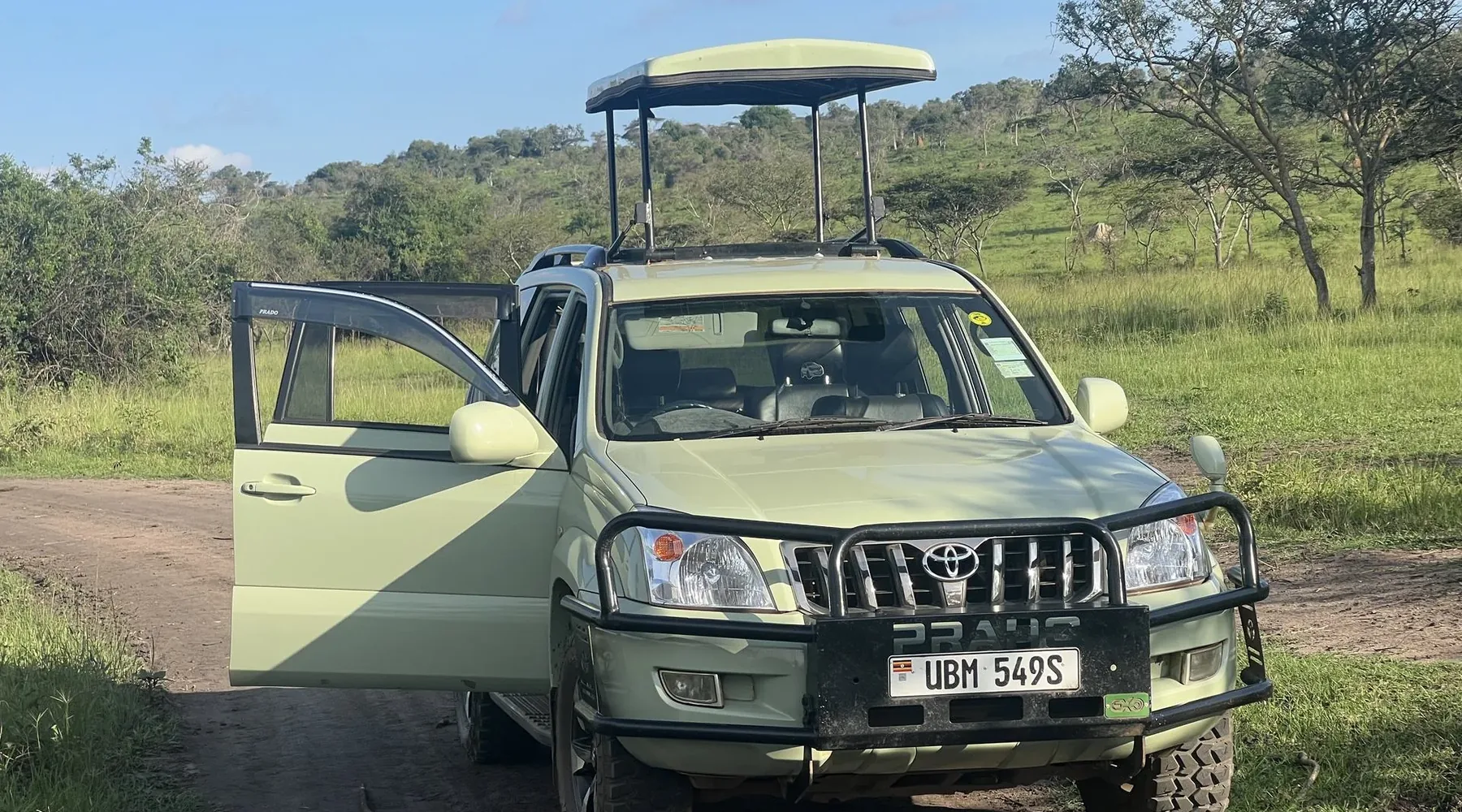
Private pop-up-roof safari vehicle in a green Uganda wildlife landscape

Tailor-Made Uganda Safari Guide

How do you plan a private Uganda safari?

Begin with your own pace, not a crowded map. The strongest private safari gives you a dedicated vehicle and driver-guide, a route that fits your dates, and a written plan that explains every permit, lodge, transfer, and shared activity.

Updated June 28, 2026 13-minute read Private safari decision guide

The essential answer

Private where it changes the journey.

A private Uganda safari normally gives your party a dedicated safari vehicle, driver-guide, route, and day-to-day pace. You decide who shares the vehicle, how the itinerary is shaped, what lodge level fits, and where time should remain flexible.

It does not automatically make every experience exclusive. National parks remain public protected areas. Gorilla and chimpanzee tracking use regulated groups, scheduled boats and domestic flights may carry other guests, and lodges have shared spaces. A trustworthy proposal distinguishes these clearly.

The value is control over the connections: airport arrival, vehicle, road rhythm, guide attention, photography stops, family pacing, lodge geography, and how one confirmed activity leads into the next.

Define the product

What should be private—and what may still be shared.

The word “private” is useful only when the operator explains exactly where it applies.

Normally private to your party

The journey between the experiences.

  • Safari vehicle for the confirmed road itinerary
  • Driver-guide assigned to your route
  • Airport and lodge transfers listed as private
  • Route design, departure rhythm, and photography stops
  • Rooming plan and lodge category selected for your party
  • Support before and during the safari
Often shared or regulated

The park activity itself.

  • Gorilla and chimpanzee tracking groups
  • UWA ranger briefings and guided park activities
  • Scheduled boat cruises unless privately chartered
  • Domestic scheduled flights and airstrip transfers unless specified
  • Lodge dining, lounges, pools, and public spaces
  • Wildlife sightings and public park roads
Private does not mean guaranteed. No responsible operator can guarantee a particular wild animal, a short gorilla trek, an empty sighting, perfect roads, or weather. Privacy improves the way the itinerary responds; it does not control nature.

Private vs group safari

The main difference is control, not decoration.

Planning pointPrivate safariScheduled group safari
Departure dateBuilt around your available dates and confirmed servicesUsually fixed departures
VehicleExclusive to your booked party when statedShared with other booked travelers
Daily paceAdapted within permits, park rules, distance, and lodge timingsBalanced around the whole group
RouteCan be reshaped around interests, comfort, and realistic travel timePreset route with limited changes
Guide attentionFocused on your party's interests and needsShared across several travelers
Cost structureVehicle and guide costs shared only by your partyFixed costs spread across more paying guests
Best fitCouples, solo travelers, families, photographers, special interests, slower pacingBudget-led travelers comfortable with fixed dates and group rhythm

Who benefits most

Private travel solves different problems for different guests.

Couples and honeymooners

More quiet, fewer compromises.

Protect special lodges, unhurried mornings, scenic pauses, and a route that does not force romance into someone else's timetable.

Solo travelers

Full control, higher fixed-cost share.

Follow birds, photography, primates, or culture without a group vote. Expect a higher per-person price because the vehicle and guide are not split with companions.

Families

Plan around real ages and energy.

Adjust drive length, meals, rooming, pool time, activity eligibility, and recovery days instead of asking children to follow an adult group schedule.

Photographers and birders

Let attention stay where it belongs.

Make patient stops, choose specialist guides, protect equipment space, and avoid moving simply because a group has finished looking.

Older or mobility-aware guests

Design support before arrival.

Discuss vehicle access, steps, room position, trek expectations, porter help, walking distances, medical needs, and slower road days early.

Friends and small groups

Share the vehicle without losing privacy.

A private party can lower the per-person fixed cost while keeping the journey inside one circle of friends or family.

Choose the route length

Give each part of Uganda enough time to matter.

A private safari is not improved by squeezing more park names into the same number of days.

3–5 days

One focused chapter.

Choose Murchison Falls, a short gorilla journey, Kidepo by air, or a carefully paired gorilla and Lake Mburo route. Keep ambitions narrow.

7–10 days

A strong western circuit.

Link Lake Mburo, Queen Elizabeth, Bwindi, or Kibale in a logical sequence. This is often the sweet spot for first-time visitors.

11–15 days

More depth or slower comfort.

Add Murchison, more primate time, Rwenzori foothills, a family rhythm, or a deliberate honeymoon pace without turning every night into transit.

16–20+ days

Let the country change around you.

Build a broad Uganda story with north, west, mountains, wildlife, primates, or eastern highlands. Long routes still need selectivity.

Use the current private Uganda safari routes as starting shapes, not fixed scripts. A good planner can shorten, extend, upgrade, simplify, or re-sequence them after learning what matters to you.

Road, air, or both

Choose transport by what the saved time is worth.

Private road safari

The country between the parks stays visible.

Road travel connects Lake Mburo, Queen Elizabeth, Bwindi, and Kibale naturally. It gives the driver-guide continuity and allows planned stops, but long transfers must be acknowledged honestly.

Flight-supported safari

Protect short trips and remote places.

Domestic flights can reduce road fatigue when time is limited or the route includes distant regions. They add ticket cost, luggage limits, airstrip transfers, and fixed schedules.

Hybrid route

Drive the story, fly the repetition.

A strong compromise is to travel through a logical road circuit, then fly one long final leg to Entebbe. The exact value depends on dates, airstrips, and lodge position.

If a domestic flight is included, read the Uganda safari packing list before choosing luggage. Small-aircraft allowances can be much lower than international flight limits.

Vehicle and driver-guide

Your guide shapes more hours than any single lodge.

The driver-guide interprets wildlife, manages road rhythm, coordinates park timing, notices fatigue, solves small problems, and decides when a stop deserves patience. Ask about language, field interests, route experience, and how specialist birding or photography guidance is handled.

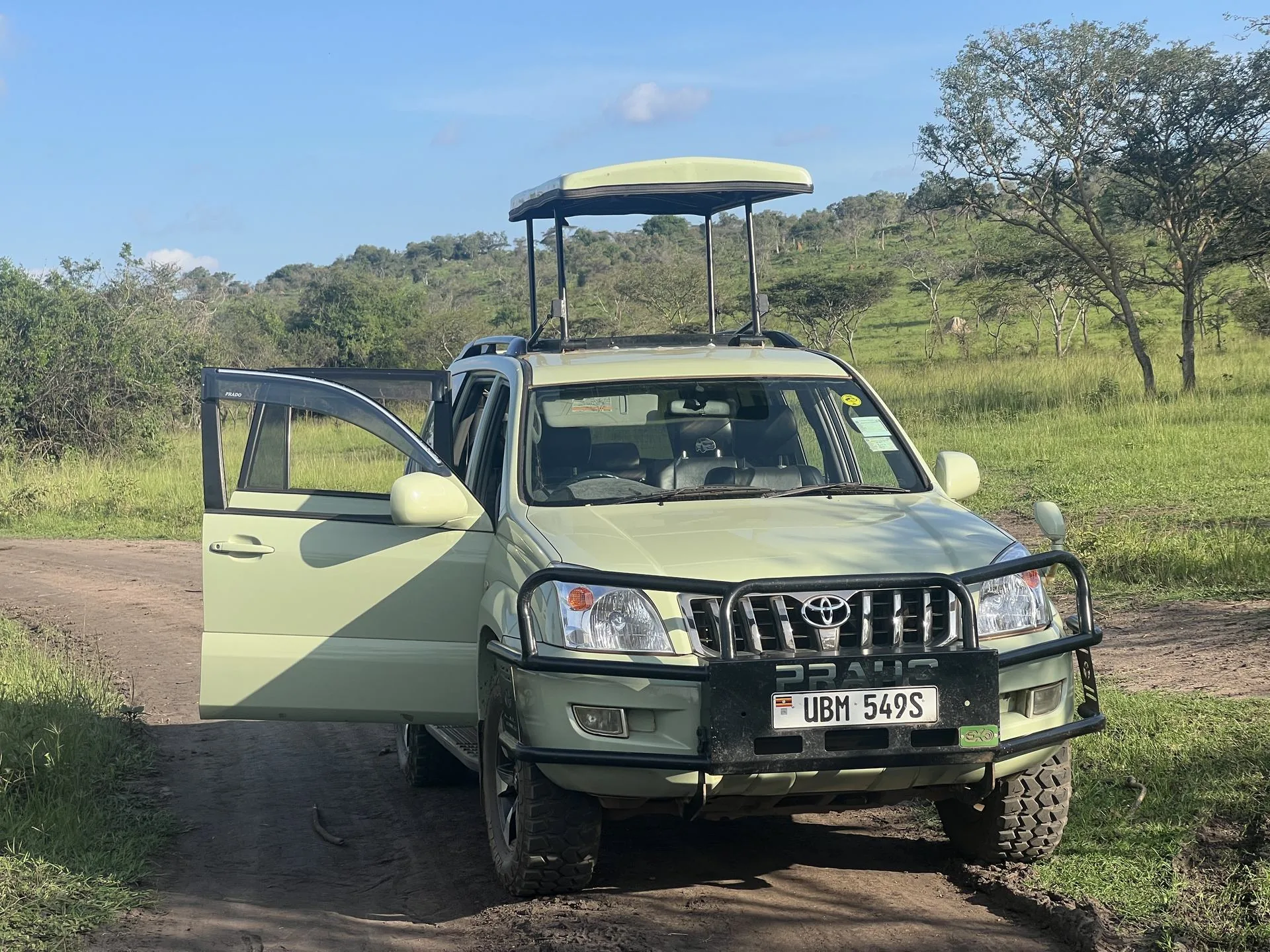
The vehicle should suit party size and route. Confirm seating, pop-up roof or viewing arrangement, luggage capacity, air conditioning expectations, charging options, water, and whether every road section uses the same vehicle.

Private does not automatically mean one window row per traveler, unlimited off-road driving, or a luxury vehicle brand. Ask for the actual configuration and respect park rules.

Private Uganda safari vehicle positioned in a wildlife landscape
The right vehicle is part viewing platform, part luggage system, and part home between Uganda's parks.

Cost and written quote

Price comes from the route—not the word “private.”

The same vehicle can support a focused midrange safari or a high-end journey. Permits, lodges, rooming, flights, activities, dates, and party size create the final number.

Your quote should name

The services you are buying.

  • Exact dates, route, and number of travelers
  • Rooming and named lodges or stated alternatives
  • Vehicle exclusivity and driver-guide language
  • Permits, park entries, boats, walks, and other confirmed activities
  • Meals, drinking water, airport transfers, and domestic flights
  • Currency, payment stages, change, and cancellation terms
Your quote should exclude clearly

The costs that remain yours.

  • International flights unless specifically arranged
  • Visa, insurance, and personal health preparation
  • Tips, premium drinks, laundry, and personal purchases
  • Optional activities not included in the confirmed itinerary
  • Permit or supplier changes outside the quoted terms
  • Anything described only as “pay locally” without an amount or explanation

Published package figures are planning anchors. For current examples and a line-by-line comparison method, read our Uganda safari cost guide.

Safer inclusion wording: park entrance fees and confirmed itinerary activities listed in your written quote. That is more useful than a broad promise that “everything” is included.

A safe planning sequence

From first idea to confirmed private safari.

Step 1

Share the honest brief.

Give dates, party size, ages, rooming, approximate budget, must-do experiences, comfort level, mobility notes, and international flight status.

Step 2

Build the route before naming every lodge.

Agree on regions, sequence, road rhythm, activity load, and whether a domestic flight is worth adding.

Step 3

Check constrained inventory.

Confirm gorilla or chimpanzee permit reality, room categories, family units, domestic flights, and specialist guides before treating the plan as final.

Step 4

Read the written quote.

Match dates, traveler names, rooms, vehicle, permits, activities, meals, flights, inclusions, exclusions, and terms.

Step 5

Pay only the agreed invoice.

Use the provided reference and approved payment method after the written itinerary and quote match what you intend to book.

Step 6

Prepare for the real route.

Finalize entry and health documents, insurance, packing, arrival details, emergency contacts, and any guide briefing before departure.

Common planning mistakes

A private itinerary can still be badly designed.

Too many one-night stays

Privacy cannot repair constant packing.

Long drives followed by one night and an early departure create motion, not depth. Protect at least a few two-night stays.

Wrong gorilla geography

The lodge and permit entry point disagree.

Bwindi has several trekking sectors. Match the permit, lodge, briefing point, and previous transfer before payment.

Vague vehicle promise

“Safari vehicle” describes too little.

Confirm party capacity, viewing arrangement, luggage, road sections, exclusivity, and how airport or flight days are handled.

Hidden shared activities

The word private is stretched too far.

Ask which boats, treks, ranger walks, flights, and transfers include other guests. Shared does not mean poor; undisclosed shared does.

Budget without priorities

Every line is cut equally.

Name what must survive: a gorilla permit, quiet lodge, family room, domestic flight, slower pacing, or a specialist guide.

Late disclosure

Needs appear after booking.

Mobility, dietary, medical, rooming, child-age, photography, or luggage needs are much easier to solve before deposits and permits.

Useful starting routes

Choose a shape, then make it yours.

Focused wildlife

3-day Murchison Falls

A compact route for rhinos, the Nile, falls, boat wildlife, and private game drives.

Family journey

14-day family comfort

A longer route designed around realistic family energy, wildlife, forest, and rooming.

Country in depth

20-day Uganda discovery

An extended private circuit for travelers who want the country to change slowly around them.

Private safari questions

Quick answers before you request a proposal.

What is a private Uganda safari?

It normally means your booked party has its own safari vehicle, driver-guide, itinerary, and pace. Park spaces, gorilla and chimp groups, scheduled boats, ranger activities, lodges, and domestic flights may still be shared.

How much does a private Uganda safari cost?

Cost depends on length, group size, rooming, lodge category, permits, activities, distance, and road or air choices. Current GambaUganda examples begin at $930 per person for a focused three-day Murchison route, but the final amount belongs in a written quote.

Is gorilla trekking private?

Not automatically. Your vehicle, transfers, guide support, lodge plan, and wider itinerary can be private. UWA allocates standard permit holders to regulated tracking groups and a gorilla family on the trekking morning.

How many days should I book?

Three to five days suits one focused region, seven to ten days builds a strong western circuit, and eleven to fifteen days allows more parks, primates, or slower pacing. Longer journeys can reach the north or add specialist interests.

Does private travel work for solo guests and families?

Yes. Solo travelers gain complete pace control but carry more of the vehicle's fixed cost. Families can shape drives, rooms, meals, activities, and downtime around children's ages.

Should I travel by road or domestic flight?

Road travel reveals more of Uganda and connects western parks naturally. Flights protect time and comfort on short or remote routes. Many strong itineraries drive a logical circuit and fly one long final leg.

Official context: Uganda's range of protected areas and experiences was checked against the Uganda Tourism Board's national parks guide. Permit and regulated tracking context was checked against the Uganda Wildlife Authority rates page and gorilla and chimpanzee tracking guidelines. Availability, tariffs, routes, and supplier terms can change; reconfirm them in writing.

Continue planning

Route collection

Uganda safari packages

Compare focused wildlife, gorilla, family, honeymoon, hiking, and extended private journey shapes.

Budget guide

Uganda safari costs

Use current examples and a quote checklist to understand what changes the final price.

Packing guide

Uganda safari packing list

Prepare for vehicles, forest, savannah, highlands, boats, health items, and domestic flight limits.

Your route, clearly written

Tell us how you want the safari to feel.

Share dates, travelers, interests, comfort level, and budget range. We will shape a private Uganda route, check constrained inventory, and explain every private and shared element before payment.