Colobus and forest monkeys
Black-and-white colobus, red colobus, L'Hoest's monkeys, red-tailed monkeys, blue monkeys and mangabeys add colour and movement above the trail.
 Gamba Uganda Safaris
Gamba Uganda Safaris
Operated by GUS Signature Expeditions Limited
Change language
Operated by GUS Signature Expeditions Limited
Kibale Forest Guide
Walk beneath a restless canopy, follow ranger calls through the trees and leave room for Bigodi, crater lakes, coffee country and the softer rhythm of western Uganda.
Safari overview
Kibale National Park sits in western Uganda near Fort Portal, where rainforest, wetlands, tea country and crater-lake scenery meet. It is best known for chimpanzee tracking, but the park is richer than one activity. A good Kibale safari gives you time for the morning forest, the calls in the canopy, Bigodi Wetland and the quiet green landscape around the park.
For many travelers, Kibale works beautifully between Murchison Falls, Queen Elizabeth, Bwindi or Rwenzori routes. It adds a different rhythm to the safari: less open savannah, more forest texture, more sound, more patience and a close look at Uganda's primate world.
Forest value
The park protects about 795 square kilometres in western Uganda. Changes in elevation carry the landscape from tropical forest into woodland, wetlands, grassland and forest edge, which is why a Kibale day holds far more than one kind of habitat.
Forest protection came before the present park. In 1993, the forest reserve and the former wildlife-corridor area were brought together as Kibale National Park. That history still matters when Kibale is planned alongside Queen Elizabeth National Park: the two belong to a wider western Uganda conservation story, even though today's landscape faces far more pressure than the old corridor once did.
Why Kibale matters
You do not come here only to tick off chimpanzees. You come because the forest has a pulse. One minute the trail is quiet, the next the canopy cracks open with calls, drumming, movement and a guide quietly asking everyone to stay together.
That is why we plan Kibale with breathing room. A rushed arrival, a tired morning or a badly placed transfer can make the forest feel like an appointment. Done properly, it becomes one of the most memorable human moments in a Uganda journey.
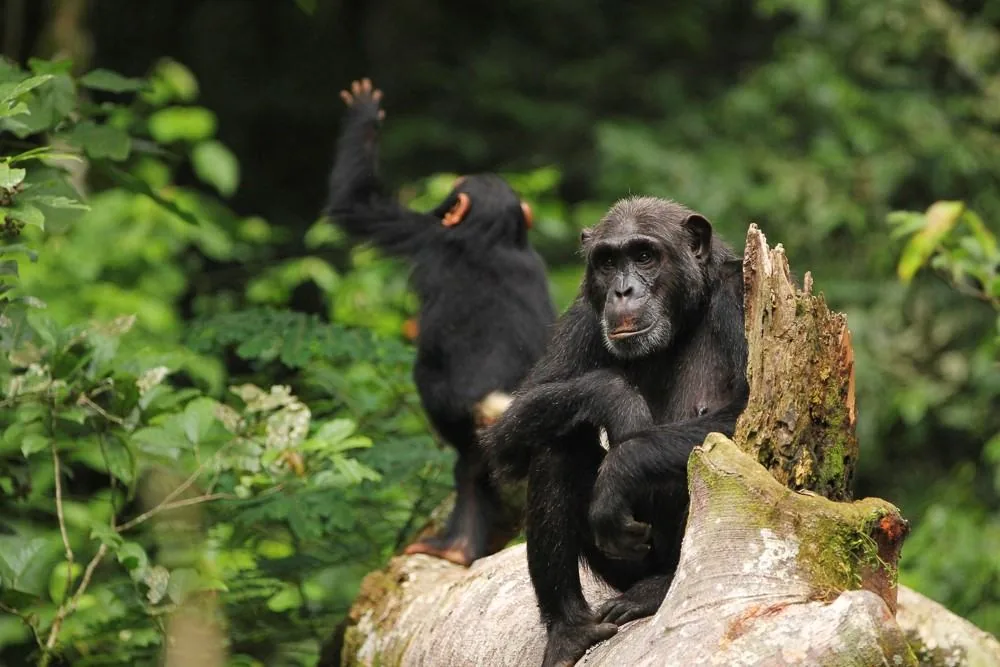
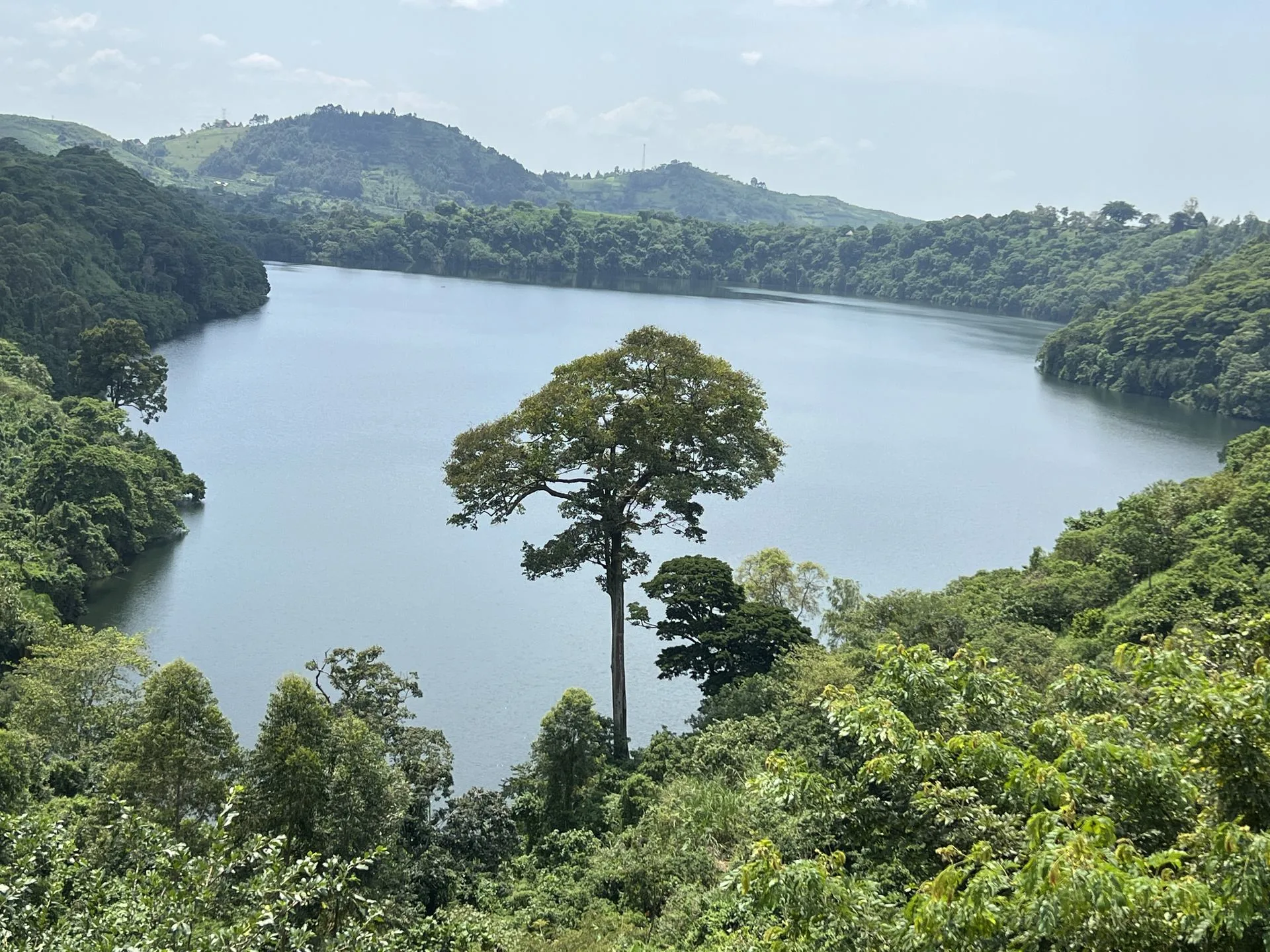
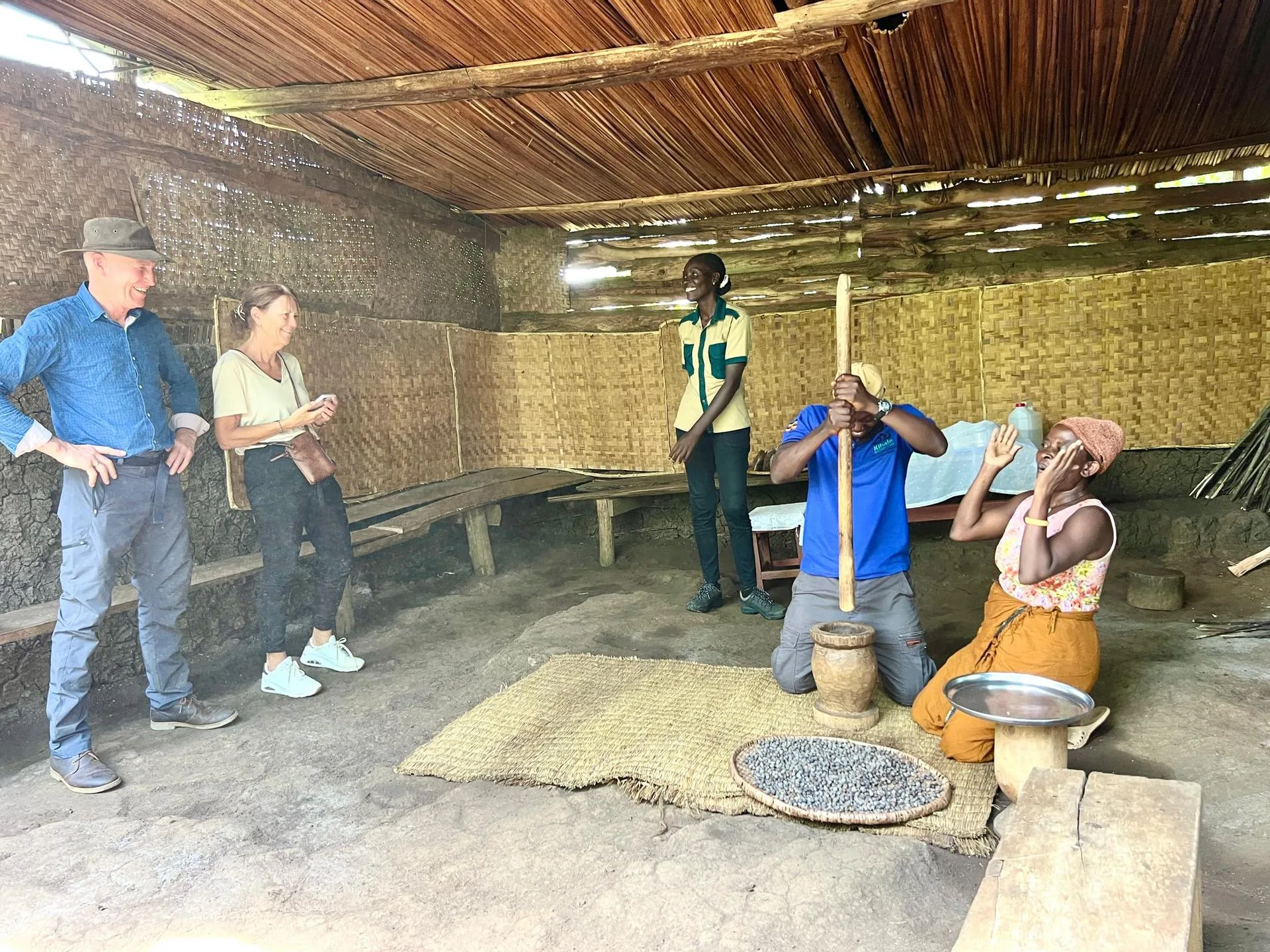
Three views of Kibale
Chimpanzees may lead the story, but Kibale becomes more memorable when the route also makes room for western Uganda's water, farms and lived landscape.
The forest morning
Chimp tracking can be quick or it can ask for patience. The group may be feeding high in the trees, moving fast through undergrowth or calling from somewhere you cannot yet see. The anticipation is part of the experience.
When you finally stand near them, the mood is very different from gorillas. Chimps are restless, vocal, social and full of decisions. They look busy. They argue, groom, climb, vanish and reappear with the confidence of animals who know every route through their forest.
Beyond one great ape
The canopy, forest floor, wetlands and edges each reveal a different layer. A guide who reads calls and movement can make the walk richer than a single sighting.
Black-and-white colobus, red colobus, L'Hoest's monkeys, red-tailed monkeys, blue monkeys and mangabeys add colour and movement above the trail.
Forest elephants, buffaloes, bush pigs, duikers and giant forest hogs occur here, but dense vegetation means they are part of the ecosystem rather than promised sightings.
Bigodi and other forest-edge habitats reward slower observation, especially for birders and travelers who want the quieter life around the primate forest.
How to pace it
Bigodi Wetland, crater-lake views, tea country and Fort Portal make Kibale feel less like a single forest appointment and more like a real western Uganda chapter. The trick is not adding everything. It is choosing the pieces that fit your energy.
Coffee and the forest edge
Robusta coffee has wild roots in Uganda's forests, including Kibale. Beyond the park boundary, small farms and community enterprises connect that deeper botanical story with household livelihoods and the everyday work of growing, drying, roasting and brewing coffee.
Where a genuine community experience is available, it can sit naturally beside Bigodi or a crater-lake drive. The point is not another staged stop. It is a calm conversation about how people live near a protected forest and what responsible tourism can contribute.
Where to sleep
Distance from the briefing point, road conditions, meal timing, views and the next transfer all matter more than a simple category label.
Isunga Lodge's simpler room options or a similar base can work when access, warmth and a sensible budget matter most.
Turaco Treetops or a similar forest-area lodge suits travelers who want stronger comfort without losing Kibale's natural mood.
Kibale Lodge is a premium fit when privacy, design, Rwenzori views and a more complete lodge experience matter.
Named lodges are examples, subject to availability and final route fit. We confirm the property only after matching it to your permit time and onward journey.
Related planning
Chimpanzee tracking works best when it is connected to the right forest guide, western safari circuit or mountain-and-primate itinerary.
Plan it humanly
We can shape Kibale as a clean chimp stop, a richer primate-and-wetland stay or a slower western Uganda chapter with crater lakes and lodge time.