
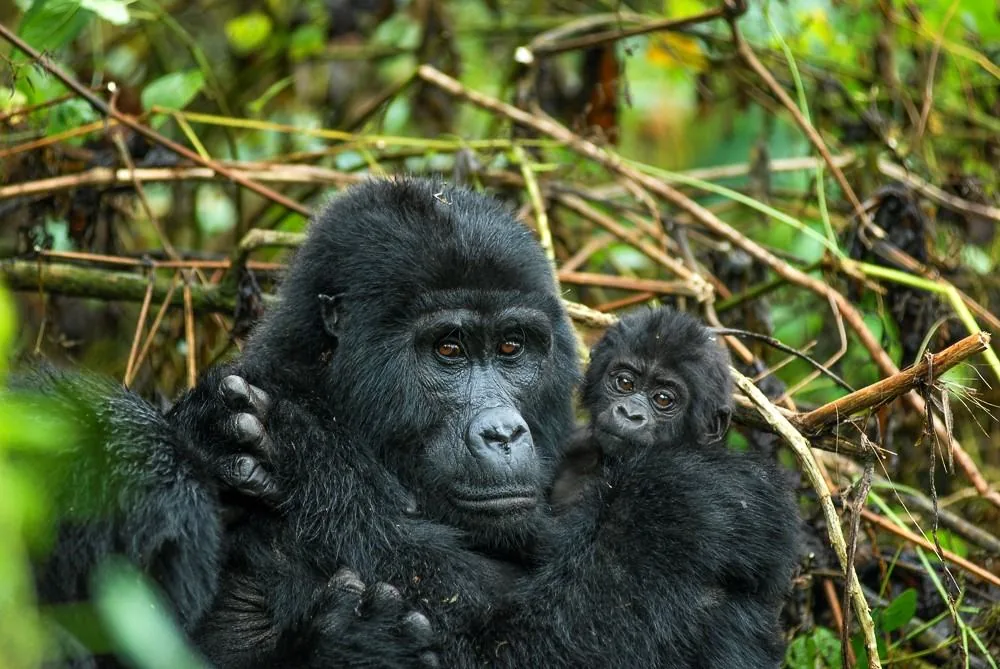
I have guided hundreds of travellers across Uganda. I have watched lions yawn before sunrise in Queen Elizabeth National Park, elephants disappear into the morning mist in Murchison Falls, and chimpanzees scream across Kibale Forest.
But every time I take guests gorilla trekking, I still feel the same excitement. Not because I do not know what we will find, but because I never know how the forest will introduce us. Every gorilla trek writes its own story. This was ours.
6:00 A.M.
Coffee, quiet smiles and butterflies.
My alarm had gone off long before sunrise. By six o'clock, my guests and I were already having breakfast. The lodge was unusually quiet. Normally people talk about yesterday's game drive or ask what animals they might see next. This morning was different. Everyone seemed lost in their own thoughts.
One guest looked across the table and smiled. “So, what if the gorillas don't want visitors today?” Everyone laughed. I smiled back. “Then today belongs to the gorillas.” That answer broke the tension. Soon coffee cups were empty, backpacks were zipped, cameras were checked for the hundredth time, and we climbed into the safari vehicle.
Our destination was the Uganda Wildlife Authority briefing centre, about thirty-five minutes away. As the road climbed through the hills, the morning mist slowly drifted across the valleys. Uganda was waking up.
Ruhija is Bwindi's highland birding hub as well as a gorilla-trekking base. On a slower morning, the forest edges can reveal turacos, Albertine Rift specials and, with luck, the much-wanted African Green Broadbill. Those calls through the mist are part of the atmosphere long before the trek begins.
At the briefing centre
A welcome we never expected.
When we arrived, the place was already buzzing with excitement. Visitors from different countries stood in small groups introducing themselves; some looked confident, others slightly nervous. While permits and registrations were being checked, drums suddenly echoed across the briefing area.
Local community dancers appeared in colourful traditional outfits. Within minutes the whole atmosphere changed. People who had been standing quietly with coffee cups were clapping along to the music. A few visitors even joined the dancing. You could tell who had rhythm, and who definitely did not. Everyone laughed anyway.
I love this part of the morning because it reminds visitors that gorilla conservation is not only about protecting wildlife. It also supports the people who call these forests home.
“There are no bad gorilla families. Only different stories waiting to happen.”Field note, before the allocation
Then a Uganda Wildlife Authority ranger called everyone together and explained the rules: keep your distance, speak softly, never touch a gorilla, and do not trek when ill because mountain gorillas can catch some human diseases. Finally came the gorilla family allocations. Each habituated family welcomes a maximum of eight visitors each day, protecting the gorillas while keeping the experience personal.
The ranger looked down at his clipboard, then smiled. “Bitukura.” That was us. A few guests looked at me. “Is that a good family?” I laughed and gave them the only honest answer: there are no bad gorilla families. Our guide introduced himself, and two armed rangers joined us for the forest walk. Their rifles were not for gorillas; they were there in case other wildlife crossed our path.
Support on the trail
The famous Bwindi helicopter.
Among our group was a mother travelling with her daughter. She quietly admitted she was not sure her legs would manage the steep mountain trails. Our guide smiled confidently. “Don't worry. We've organised a helicopter.” Everyone immediately looked into the sky, including me. Nothing.
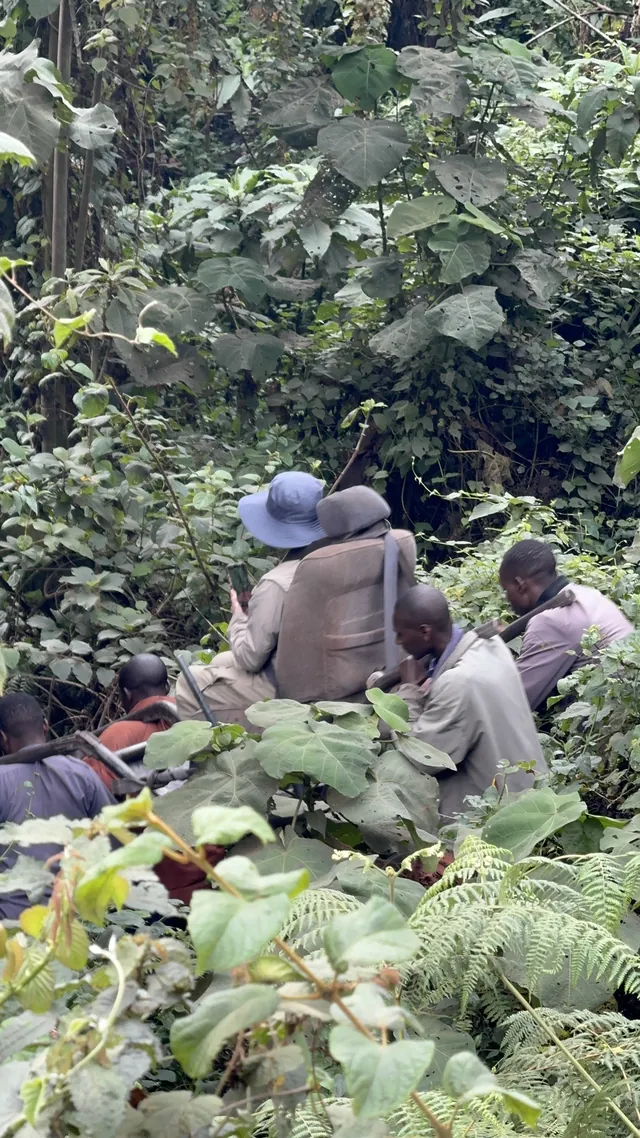
About a minute later, a team of smiling porters walked towards us carrying a specially designed chair. The whole group burst into laughter. “This,” the guide said proudly, “is the Bwindi helicopter.”
And honestly, it might be one of the most beautiful inventions I have ever seen. Those men do not simply carry people; they carry dreams. About fifteen porters worked together throughout the trek, taking turns whenever someone became tired. The trails were steep, the mud was slippery, and the forest offered no shortcuts, yet they carried her with smiles, jokes, and extraordinary teamwork.
Watching them reminded me that gorilla trekking is not only about gorillas. It is also about people helping people experience something extraordinary.
The approach
Into the forest.
The moment we stepped beneath the forest canopy, everything changed. The air became cooler. The sunlight faded. Birdsong echoed high above us, wet earth filled the air, and the deeper we walked, the quieter everyone became. Nobody had asked anyone to stop talking. The forest simply has a way of making people whisper.
Every few minutes our guide stopped: fresh footprints, broken branches, recently chewed leaves. Signs. The trackers were staying in contact over the radio. The gorillas were moving, and so were we. Some sections were surprisingly steep. One guest slipped slightly before catching herself. “So this is why you kept insisting on proper hiking boots.” “Exactly,” I replied. Everybody laughed again, then continued climbing.
After what felt like both forever and no time at all, our guide stopped. He raised one finger. Silence. Then he whispered, “They're close.” He asked us to leave our walking sticks behind. From this point onward, we walked slowly. Very slowly. Every heartbeat suddenly became louder.
The gorilla hour
One hour I'll never forget.
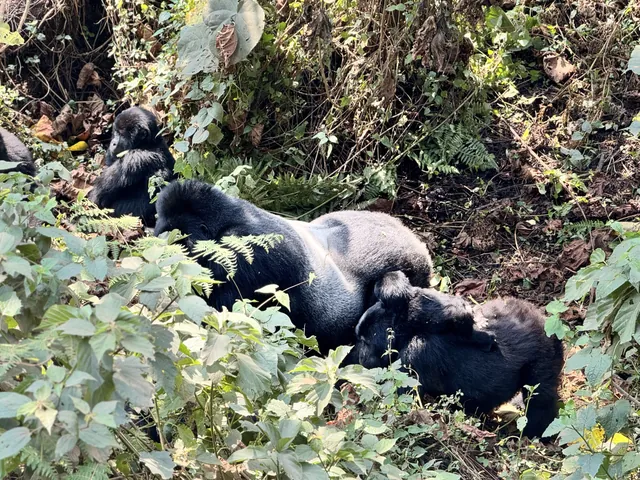
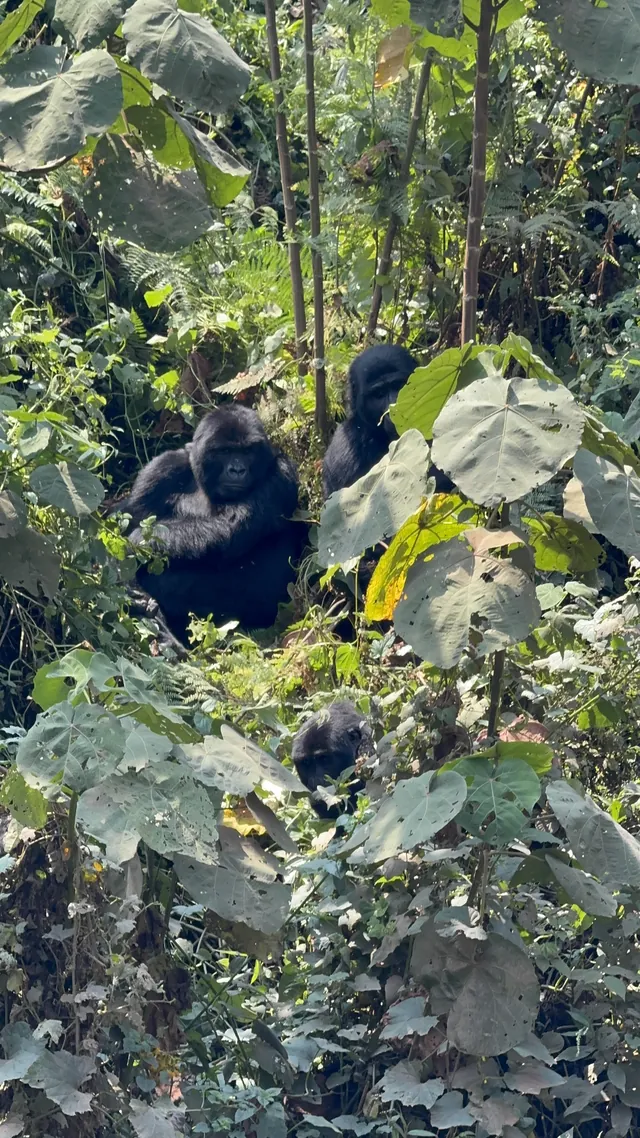
Branches moved gently ahead. Leaves rustled. Then I saw him: a huge silverback, less than ten metres away. He looked towards us for only a few seconds before calmly returning to breakfast. No roaring. No drama. Just quiet confidence. In that moment I realised this was not our forest. We were simply invited guests.
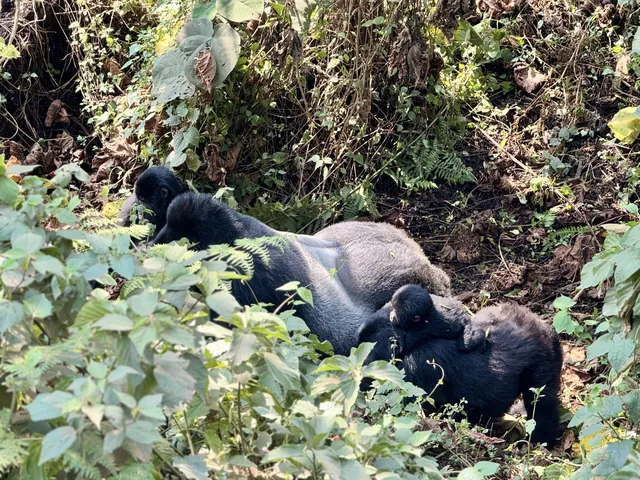
The Bitukura family had around sixteen members during our visit: three magnificent silverbacks, several females, playful juveniles, and two tiny babies who completely stole the show. One little gorilla climbed onto its mother's back before sliding off again. Another rolled around in the leaves like a child who had completely forgotten adults were watching.
One silverback slowly walked past us, close enough that I could hear him chewing leaves. Another scratched his shoulder before lying down for what looked like a very comfortable morning nap. Mothers groomed one another. Youngsters wrestled. Babies chased each other through the vegetation. Life simply continued.
We were not watching a performance. We were witnessing a family going about an ordinary morning.From the Bitukura encounter
I glanced at my guests. Some had cameras raised. Others had forgotten to take photographs altogether. One lady quietly wiped away tears. No one said a word. There was no need. Sometimes silence says everything.
Leaving the forest
Time is cruel, and the walk back feels different.
Nobody warned us how quickly one hour disappears. Our guide gently looked at his watch. “I'm sorry,” he said. “It's time.” You could almost hear eight hearts breaking at once. We slowly stepped backwards, giving the gorillas the space they deserved. The silverback barely acknowledged our departure. He simply continued eating, as if he had already welcomed and said goodbye to thousands of visitors before us.
Going uphill had been challenging; walking back somehow felt effortless. Maybe because everyone was smiling. Maybe because nobody cared about muddy boots anymore. When we reached the vehicles, the daughter immediately hugged her mother. “I'm so glad we didn't cancel this.” Her mother smiled. “So am I.”
I do not think either of them will ever forget those sixty minutes. Neither will I.
A guide's reflection
Why I keep coming back.
People often ask whether gorilla trekking becomes ordinary after guiding so many visitors. The truth is that it never does, because the gorillas are never performing. Every day is different. Sometimes they feed quietly. Sometimes the youngsters are full of mischief. Sometimes the silverback reminds everyone exactly why he is the leader.
No script. No fences. No guarantees. Just a family living their lives while, for one carefully protected hour, they allow us to witness it.
As we drove away that afternoon, the vehicle was unusually quiet—not because everyone was tired, but because everyone was thinking. One guest finally broke the silence: “I've travelled to a lot of places, but I don't think anything will ever top today.” I smiled to myself. I had heard those words before, and somehow they never get old.
That is the magic of Bwindi. It does not just show you mountain gorillas. It quietly changes the way you see the natural world—and your place within it. If you ever have the chance to spend one hour with a mountain gorilla family, take it. You will come home with muddy boots, a full camera, and a story you will be telling for the rest of your life.
For the wider context behind an hour like this—from family life and nest-building to the role of the silverback—read our mountain gorilla experience guide.
If one protected hour feels too brief, travelers can also consider the four-hour Gorilla Habituation Experience in southern Bwindi, usually planned around Rushaga or nearby Nkuringo. It is a different permit and route decision, so availability and current rules should be checked before building the safari around it.
Plan your own trek
Tell us when you hope to travel.
Share the essentials and a safari specialist will help you start with permits, route timing, and the right Ruhija-area stay.