
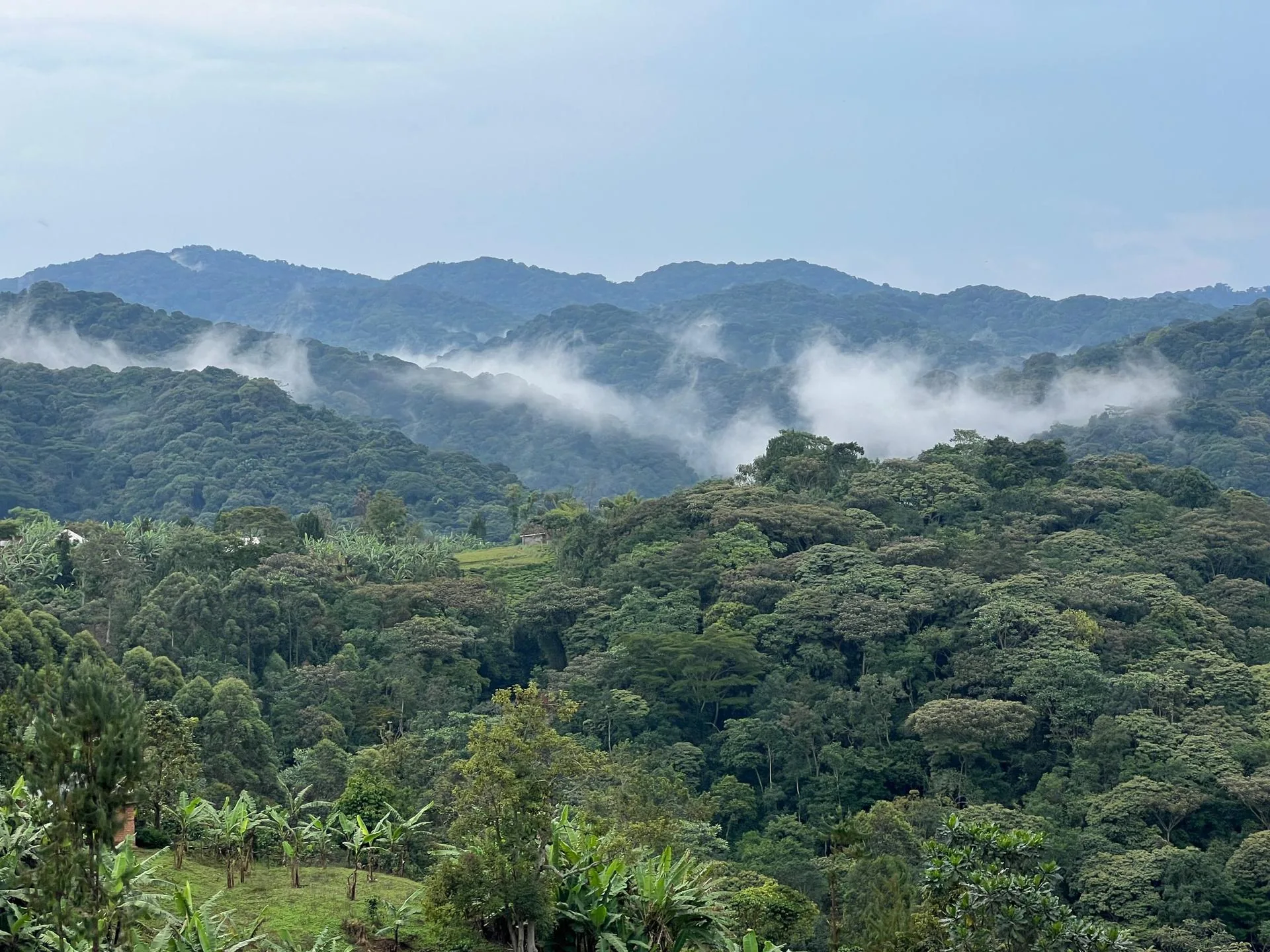
Highland forest in the Ruhija sector of Bwindi

Ruhija Sector / Bwindi

Ruhija is the highland forest sector for travelers who like quiet, altitude, and birdlife.

Ruhija sits high on the eastern side of Bwindi, with cooler air, big ridges, misty forest, strong birding, and a quieter trekking mood. On clear days, the highland roads and ridges can open views toward the Virunga volcanoes and the wider Western Rift landscape.

Why Ruhija matters

Ruhija changes the feeling of Bwindi from rainforest arrival to highland immersion.

The sector is cooler, higher, and often quieter than the busiest trekking approaches. It can be excellent for travelers who want their Bwindi gorilla trekking day to feel wrapped in mountain forest rather than village movement.

Ruhija also works well for guests who care about birding, views, and a less obvious sector choice. It can connect with Buhoma, Kabale, Lake Bunyonyi, or Queen Elizabeth depending on road conditions, lodge choice, and how much recovery time you want after trekking.

The sector opened for gorilla trekking in 2008, after years of being especially loved by birders. Today, it still keeps that quiet ecotourism feeling, but with serious gorilla trekking, forest walks, and highland route options for carefully planned Uganda safaris.

The strongest Ruhija itineraries are not built by choosing it only because it is quieter. They balance permit availability, birding ambition, lodge warmth, altitude, and the road direction before the trekking morning.

Gorilla families

Commonly tracked Ruhija gorilla families.

Final allocation is made by park staff on the trekking morning. Ruhija is strongly associated with families that suit the sector's highland forest character and quieter trekking identity. Standard gorilla trekking rules allow up to 8 visitors per habituated family each day.

Bitukura

Known for calm social viewing.

Bitukura is one of Ruhija's best-known tourism families and is often described for calm social moments when the group is positioned well in the forest.

Oruzogo

Energetic forest character.

Oruzogo is commonly linked with lively interactions, playful younger gorillas, and a strong sense of group movement through the eastern forest.

Kyaguriro

Important conservation history.

Kyaguriro was long associated with research and monitoring before becoming part of Ruhija's tourism story, giving the group a deeper conservation identity.

Mukiza

A Ruhija trekking option.

Mukiza is often referenced in the Ruhija area and helps add flexibility to permit planning for the eastern side of Bwindi.

Terrain and nature

Ruhija is cooler, steeper in places, and beautifully atmospheric.

The forest here feels high and textured: mossy trunks, ridges, valleys, mist, and bird calls carrying through cooler air. Trekking difficulty depends on where the gorillas are, but the altitude alone can make the day feel more physical than a lower forest walk.

  • Vegetation: highland forest, bamboo patches, mossy trees, dense understory, open ridge views in places, and occasional long views toward the Virunga and Western Rift landscapes.
  • Birdlife: one of Bwindi's strongest birding areas, with Green Broadbill, Great Blue Turaco, black-billed turaco, Chubb's Cisticola, Rwenzori Batis, and Albertine Rift specials possible when conditions cooperate.
  • Mubwindi Swamp Trail: a famous birding and forest walk that descends through ridges and dense forest toward swamp habitat; water and insect repellent are sensible additions to the day pack.
  • Forest walks: shorter Ruhija walks can add Regal Sunbird possibilities, colobus monkeys, L'Hoest's monkeys, and a slower feel for the forest when a full swamp descent is too much.
  • Other wildlife: black-and-white colobus monkeys, L'Hoest's monkeys, duikers, forest squirrels, many butterflies, and occasional signs of larger forest mammals.

History and conservation

Ruhija feels closely tied to monitoring, research, and forest protection.

Before gorilla trekking made Ruhija more widely known, the area was already a serious birding destination for travelers searching for Albertine Rift endemics. The opening of Bitukura to tourism in 2008 helped broaden the sector beyond specialist birding while keeping its quieter forest character.

The sector has often been associated with conservation work, birding routes, and research-oriented gorilla history. For travelers who like interpretation, Ruhija can feel especially meaningful because the forest is not only a trekking venue. It is a living highland ecosystem that rangers, guides, researchers, and communities protect daily.

Getting there

Ruhija is reachable from Kabale or Buhoma, but the road still deserves respect.

From Kabale, the common route follows the surfaced Kisoro road before turning at Ikumba Village toward Ruhija and the briefing area. From Buhoma, the drive is longer but scenic, crossing forested and highland country before reaching the eastern side of Bwindi.

There are no direct scheduled flights into Ruhija itself. Travelers usually fly to Kihihi on the Buhoma side and continue by road, or use a charter option toward Kabale when available. A private 4x4 is the sensible choice, especially after rain.

Because the sector sits high and roads can slow after wet weather, we avoid planning Ruhija as a rushed afterthought. The night before trekking should feel settled, warm, and close enough to briefing for an unforced morning.

Beyond gorillas

Birding, primate walks, and Lake Bunyonyi can soften the route.

Ruhija is not only a permit stop. Guided forest walks can add colobus monkeys, L'Hoest's monkeys, ridge views, and quieter interpretation before or after trekking. The Mubwindi Swamp Trail can be especially rewarding for serious birders when time, weather, and fitness allow.

For travelers continuing south, Lake Bunyonyi can become a gentle post-trek pause with canoe rides, island views, and local cultural encounters. For travelers moving north, Buhoma, Queen Elizabeth, or Ishasha can turn Ruhija into a bridge rather than an isolated detour.

Briefing and trekking rhythm

The Ruhija morning should feel calm, warm, and unhurried.

Gorilla trekking begins with briefing before travelers enter the forest with Uganda Wildlife Authority teams, trackers, and guides. The exact family assignment is confirmed locally, so the right preparation is practical: arrive with enough time, dress for cool mountain air, and keep the day flexible.

Ruhija can reward travelers who like interpretation. Guides may read forest signs, bird calls, ridges, fresh tracks, and the morning movement of the gorillas, making the trek feel like a living forest story rather than only a search for one hour with the family.

Birding identity

For birders, Ruhija is one of Bwindi's most valuable names.

Ruhija's reputation reaches beyond gorillas because the eastern highland forest can produce excellent Albertine Rift birding, with Green Broadbill often sitting high on a birder's wish list. The best birding version of the route gives the area more than one rushed night, keeps expectations weather-aware, and allows enough time for a guide who knows the local calls and habitats.

Even non-specialists can enjoy the atmosphere: turacos, forest calls, mist, ridgelines, mossy trunks, and the slower pace that comes when the route is not trying to force too much into one morning.

Lodge logic

In Ruhija, lodge choice should protect warmth, road timing, and briefing access.

The sector has fewer lodge choices than Buhoma or Rushaga, so comfort expectations should be matched carefully to availability. The right stay is the one that keeps the gorilla morning calm and avoids unnecessary road pressure.

Practical

Close and simple.

Useful when the priority is a clean base near the briefing area and a straightforward trekking morning.

Comfort

Warmth and road sense.

A stronger fit when you want better meals, warmer rooms, and a gentler night before trekking.

Scenic

Highland atmosphere.

Best for travelers who value views, quiet, cool air, and a sense of being deep in mountain forest.

How we plan it

Ruhija planning starts with the kind of forest day you actually want.

We first check your dates, number of travelers, gorilla permit availability, birding interest, comfort level, and whether the route is moving north, south, or staying around Lake Bunyonyi and Kabale.

Then we compare Ruhija against Buhoma, Rushaga, and Nkuringo so the sector is chosen for a reason: quieter atmosphere, birding strength, lodge fit, road logic, or a better overall route.

  • For birders: we protect extra time around Ruhija instead of treating it as a one-night permit stop.
  • For comfort-focused guests: lodge warmth and briefing access matter because the sector is cooler and quieter.
  • For route flow: we check whether Kabale, Lake Bunyonyi, Buhoma, Queen Elizabeth, or Ishasha gives the cleanest onward movement.

What to pack

Ruhija rewards travelers who prepare for cool highland forest.

Bring broken-in trekking boots, long trousers, rain protection, a warm layer for the morning, garden gloves, water, snacks, insect repellent, and a small day pack. A porter can still be a wise choice, even when the route feels less intimidating than the steeper southern sectors.

Why choose Ruhija

Choose Ruhija when you want Bwindi to feel quieter and more highland.

  • It is one of the strongest sector choices for birders.
  • It offers a cooler, mistier, more mountain-like forest mood.
  • It can work for travelers who want fewer crowds and more interpretation.
  • It often feels less congested than Buhoma, while still giving serious gorilla trekking value.
  • Its terrain is often considered less severe than Rushaga or Nkuringo, though the gorillas' location still decides the real difficulty.
  • It is a useful bridge between northern and southern Bwindi routes when planned well.

When to think twice

Ruhija needs honest comfort and road planning.

If you want the broadest luxury lodge choice, Buhoma or some southern-sector options may be easier. If you dislike cool nights, altitude, or slower roads, Ruhija should be weighed carefully against permit availability and route direction.

If a different sector gives better permits, warmer lodge options, or a cleaner route, we will say so. The goal is not to force Ruhija into the plan. It is to use Ruhija when its quiet highland strengths genuinely improve the safari.

Related safari routes

Routes that make Ruhija easier to plan.

Use Ruhija as the quiet highland anchor, then choose the safari route that gives enough time for gorillas, birding, road flow, and recovery.

Ruhija questions

Quick answers before you choose this sector.

Is Ruhija Sector good for gorilla trekking?

Yes. Ruhija is a strong Bwindi sector for travelers who want gorilla trekking with a quieter highland feel, cooler forest conditions, and excellent birding possibilities.

Is Ruhija good for birding?

Yes. Ruhija is one of Bwindi's best-known birding areas, especially for travelers interested in Albertine Rift species and the Mubwindi Swamp Trail.

Is Ruhija easier than Nkuringo or Rushaga?

Ruhija can feel less severe than Nkuringo for some travelers, but it is still high-altitude forest. Difficulty depends on gorilla movement, mud, weather, and the assigned trekking route.

Which routes pair well with Ruhija?

Ruhija can pair well with Kabale, Lake Bunyonyi, Buhoma, Queen Elizabeth, Ishasha, and wider western Uganda routes when road timing and lodge choice are planned carefully.

Ask us if Ruhija is the right quiet sector for your Bwindi safari.

We compare Ruhija against the other Bwindi sectors, then match permits with lodge warmth, road timing, birding interest, fitness, and the rest of your Uganda safari.