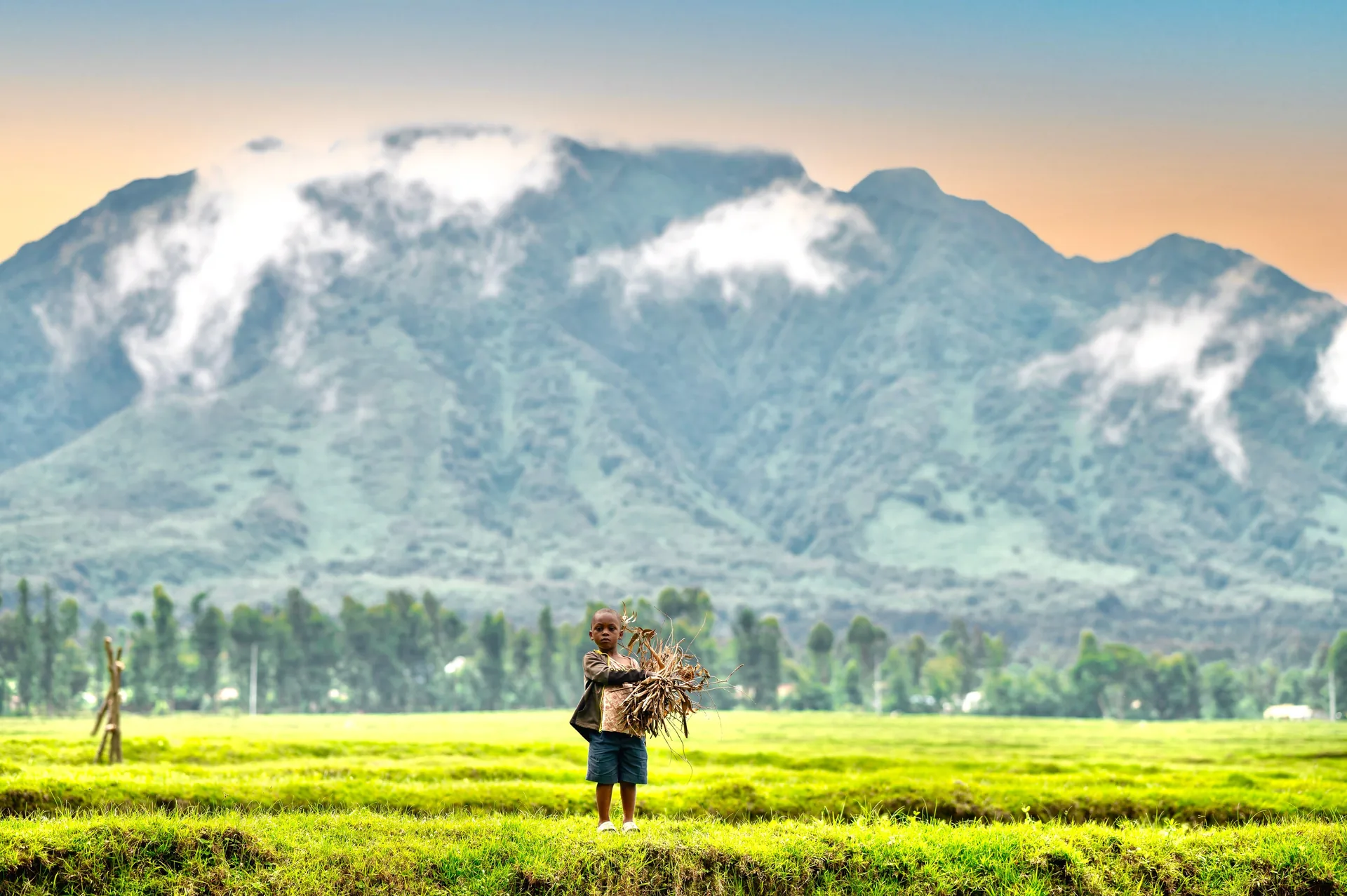
An 8-day Kilembe route trek to Margherita Peak, followed by a softer Kibale finish with chimpanzee tracking, crater lake scenery and private road transfers.
11-day Rwenzori Mountains hiking and primates safari overview
This private Uganda adventure combines an eight-day Kilembe Trail trek in Rwenzori Mountains National Park with a Margherita Peak summit attempt at 5,109m, then shifts to Kibale National Park for guided chimpanzee tracking.
Days 1 to 9 are mountain-focused, from the private transfer to Kilembe through high camps, Afro-alpine valleys and summit terrain. Day 10 brings a slower rainforest and primate experience in Kibale, while day 11 allows a crater-lake morning before the return to Kampala or Entebbe. The contrast suits travellers who want one demanding high-altitude expedition and one rewarding forest wildlife chapter in a single Uganda itinerary.
A technical, high-altitude expedition — not a casual hike
Overall levelStrenuous to technical. Eight consecutive trekking days reach 5,109m, with wet ground, steep steps, bogs, cold exposure and a glacier summit section.
Best suited toFit, sure-footed hikers who are comfortable with long mountain days, sustained ascent and following technical instruction. Prior high-altitude or mountaineering experience is strongly recommended for the summit attempt.
Before confirmationWe review your hiking background, current training, summit ambition, health considerations and insurance cover. The guide team sets the pace and makes the final safety call on the mountain.
Trekking distances, times and elevation figures below are planning estimates. Weather, trail condition, acclimatisation and group pace can change the day; the mountain guides adjust safely rather than chasing a timetable.
Day By Day
Day-by-Day Rwenzori and Primates Route
Day 1
Transfer to Kilembe / Kasese
Leave Kampala or Entebbe after breakfast and drive west through Uganda's changing landscapes toward the Rwenzori foothills. The day is about positioning well: arrive, settle in, meet the mountain team and complete a final gear check before the trek begins.
Private road transfer with flexible comfort stops
Mountain briefing and equipment review
Overnight near Kilembe or Kasese
Day 2
Kilembe Trailhead to Sine Camp
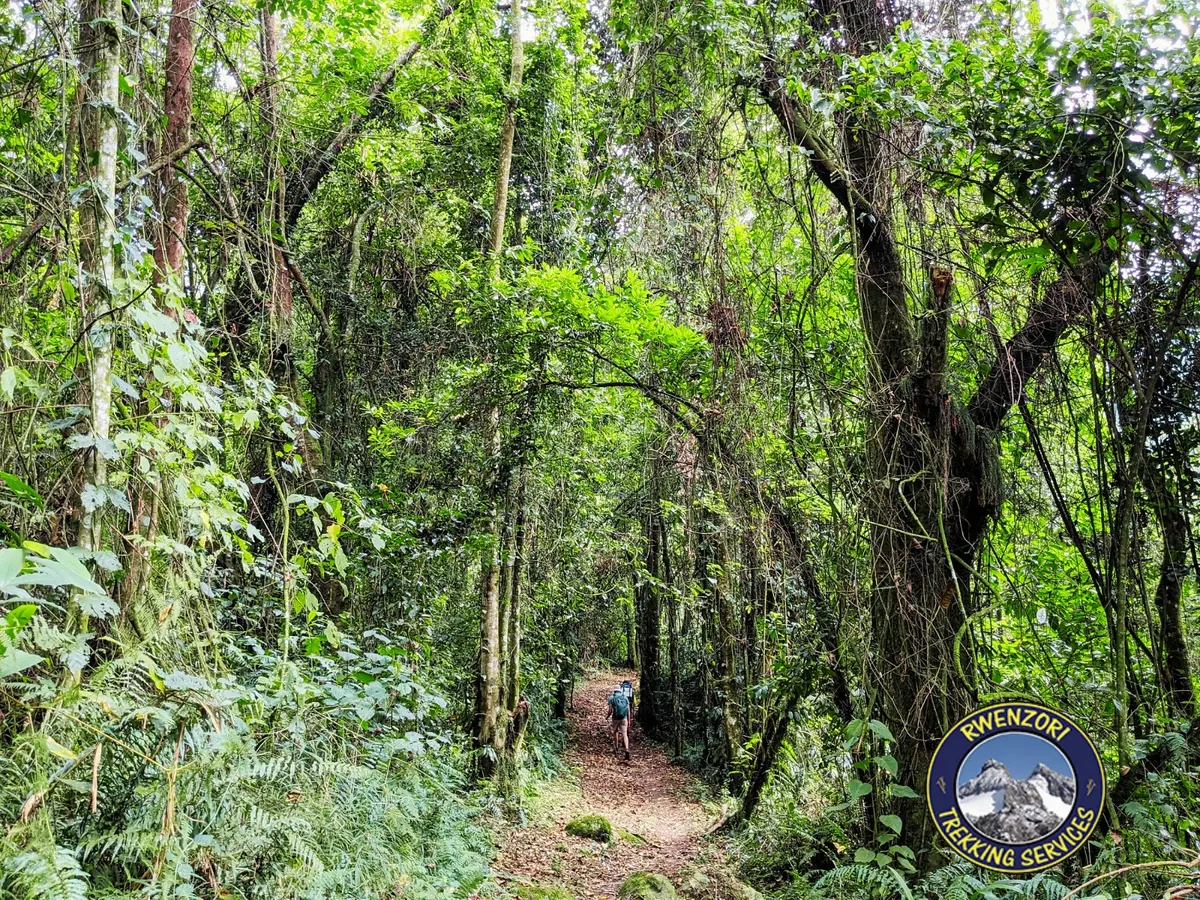
Start at Trekkers at about 1,450m and climb to Sine Camp at about 2,596m through Afro-montane forest. This is a steady introduction to the route: expect damp ground, steps, birds and primate habitat, then take time at Enock's Falls near camp. Your guides set a pace that protects the next seven trekking days rather than treating the first ascent as a race.
Planning guideAbout 9.5km · typically 5–6 hours · trailhead near 1,450m, finishing at Sine Camp (2,596m)
Climb from the trailhead to Sine Camp at about 2,596m
Enock's Falls near camp
Overnight: Sine Camp
Day 3
Sine Camp to Mutinda Camp
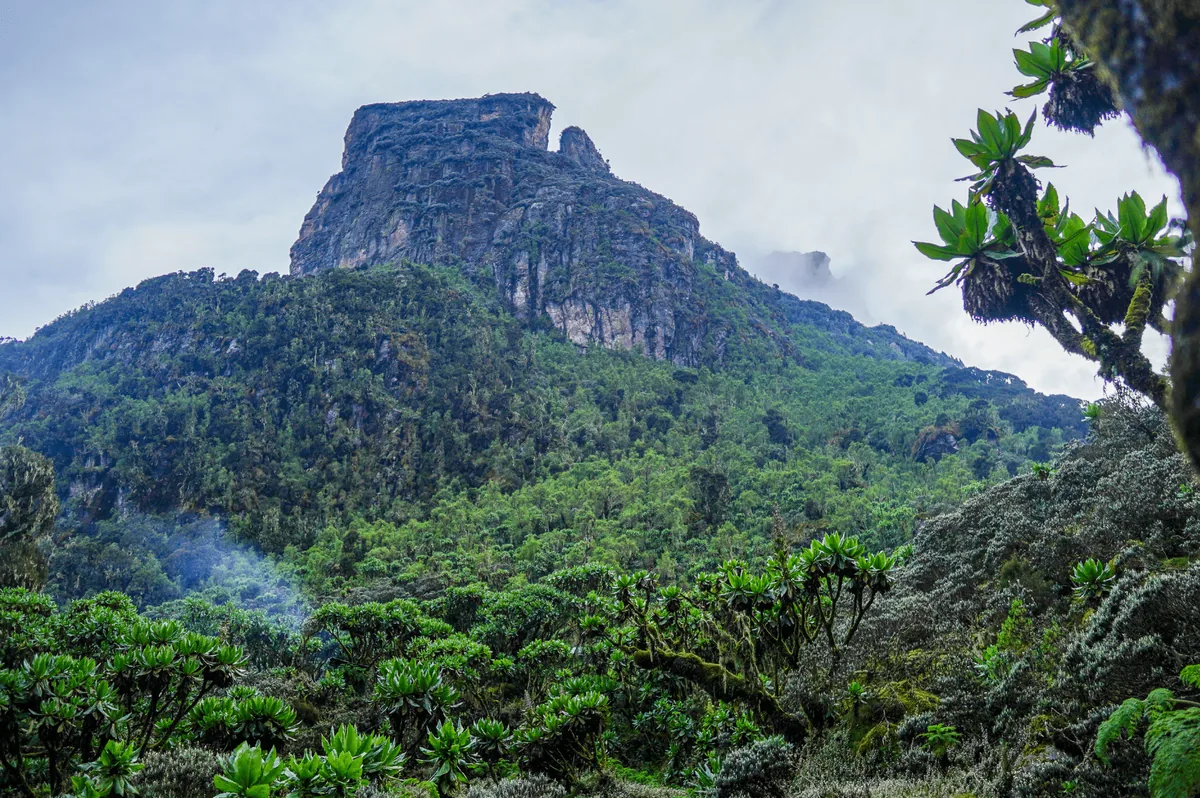
Leave Sine early and pass through the bamboo and heather zones via Kalalama. The trail gains height over slippery steps, small streams, mossy valleys and giant heather before reaching Mutinda Camp. If weather, energy and guide advice align, Mutinda Lookout can be used as an optional acclimatisation walk before returning to camp.
Planning guideAbout 6.1km · typically 6–8 hours · Sine Camp (2,596m) to Mutinda Camp (about 3,588m)
Mutinda Camp around 3,588m
Optional Mutinda Lookout climb
Overnight: Mutinda Camp
Day 4
Mutinda Camp to Bugata Camp
Cross Mutinda Valley through tussock grass, everlasting flowers and giant lobelias before climbing into Namusangi Valley. The route is often wet and boggy, with a sharper climb into the valley and waterfalls along the way. Slow, deliberate footing keeps the day enjoyable as the scenery becomes increasingly alpine on the approach to Bugata Camp.
Planning guideAbout 8.6km · typically 4–6 hours · Mutinda Camp (about 3,588m) to Bugata Camp (about 4,100m)
Namusangi Valley around 3,840m
Bugata Camp around 4,100m
Overnight: Bugata Camp
Day 5
Bugata Camp to Hunwick's Camp
Leave Bugata, climb a ridge and continue to Bamwanjarra Pass at about 4,450m. Clear conditions can reveal the three main peaks; if weather turns, the mountain team uses the pass conservatively. The trail then works around bogs, giant groundsel and lobelia country before a final rise to Hunwick's Camp, with views toward Stanley, Baker and the surrounding high valleys.
Planning guideAbout 8.4km · typically 5–7 hours · Bugata Camp (about 4,100m) via Bamwanjarra Pass (about 4,450m) to Hunwick's Camp (about 3,974m)
Bamwanjarra Pass views
Strong birding around lobelia flowers
Overnight: Hunwick's Camp
Day 6
Hunwick's Camp to Margherita Camp
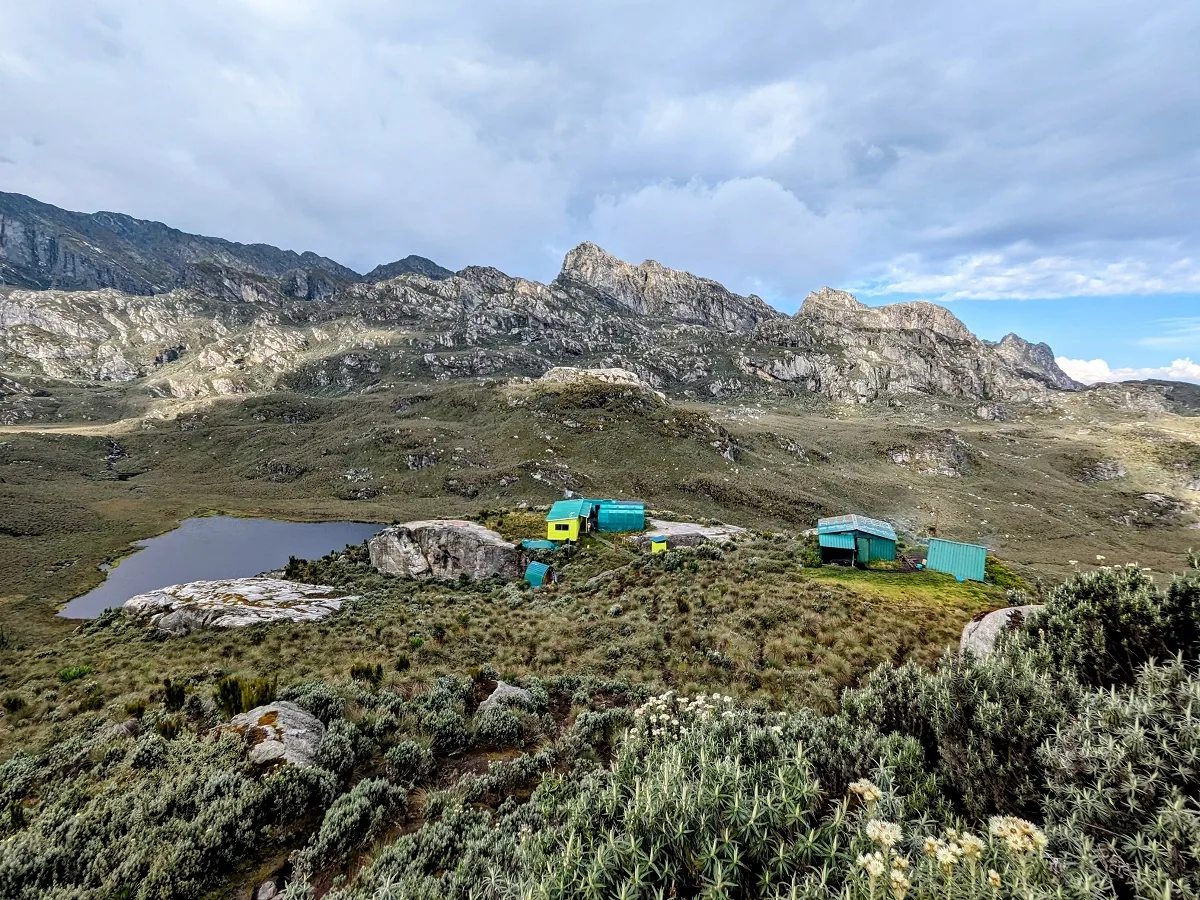
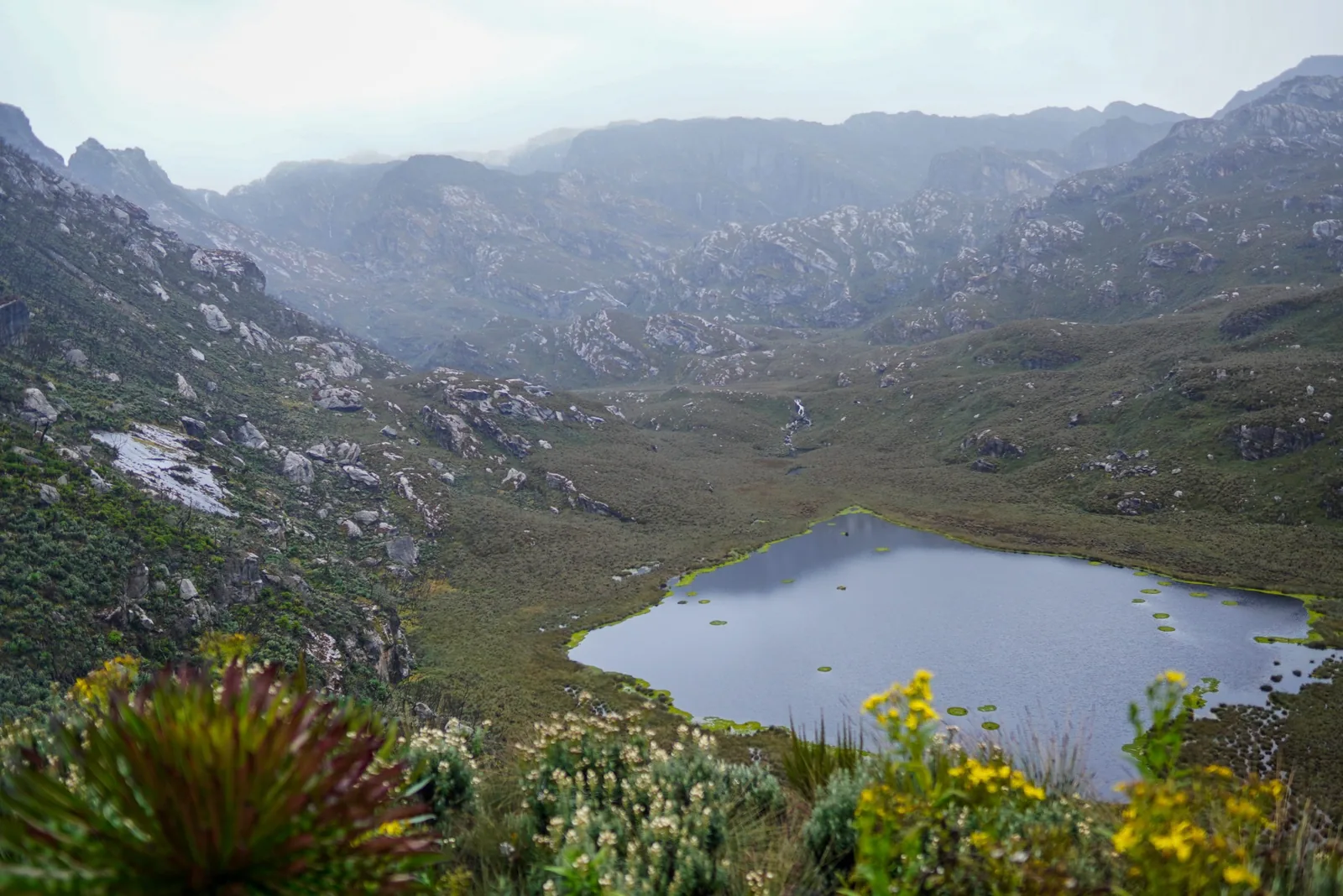
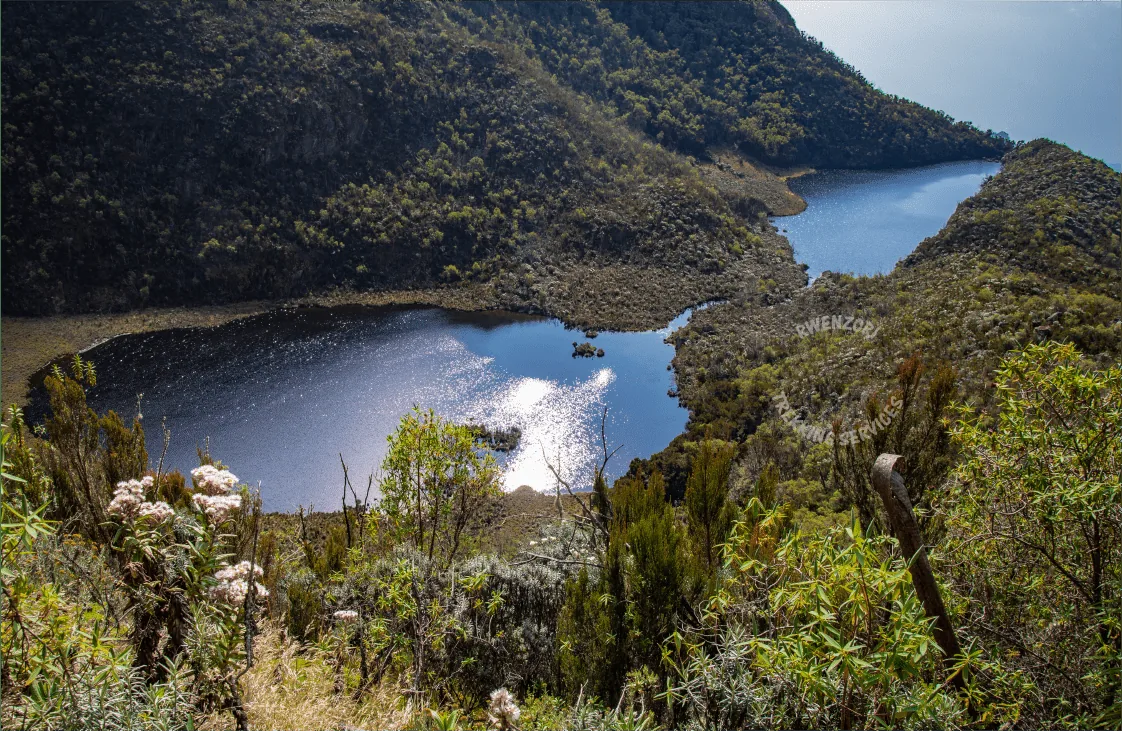
Descend to Lake Kitandara, then climb Scott Elliott's Pass and continue along the ridge to Margherita Camp at about 4,485m. The camp sits among boulders that offer some shelter, but this is still a cold, exposed summit-staging night. Your guides review the following morning's conditions, equipment and team readiness before any summit plan is confirmed.
Planning guideAbout 5.2km · typically 4–6 hours · Hunwick's Camp (about 3,974m) to Margherita Camp (about 4,485m), with a descent to Lake Kitandara before the climb
Lake Kitandara scenery
Scott Elliott's Pass
Overnight: Margherita Camp
Day 7
Margherita Peak Summit and Return to Hunwick's
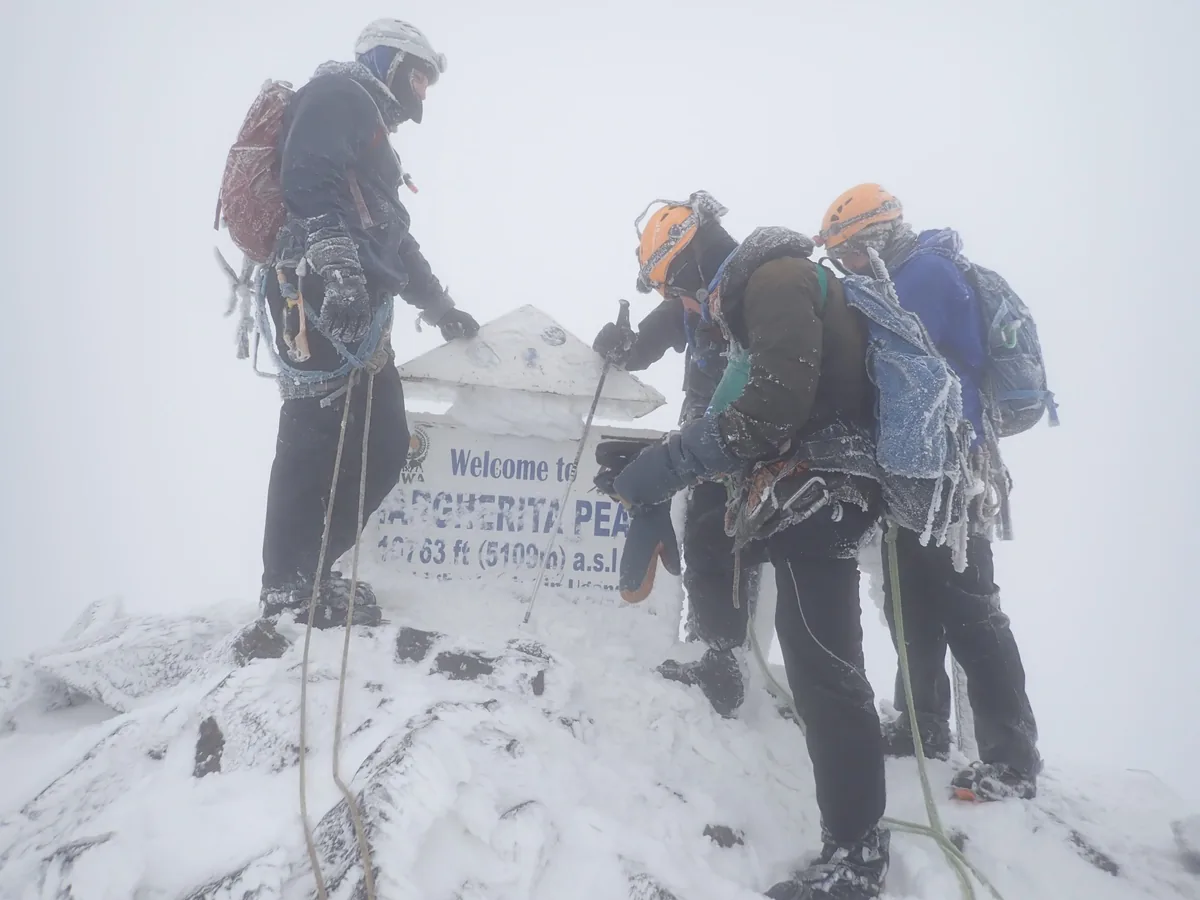
Start before dawn only after a final guide briefing. The Margherita summit attempt uses glacier, rope and technical sections that require close instruction, disciplined pacing and a strict guide-set turnaround. Weather, snow or ice conditions and the mountain team's judgement decide whether the summit attempt proceeds; a high-mountain viewpoint is a valid alternative when conditions are not suitable. Descend directly to Hunwick's Camp after the attempt.
Planning guideAbout 13.4km · typically 10–12 hours · summit attempt to Margherita Peak (5,109m), then return to Hunwick's Camp (about 3,974m)
Margherita Peak: 5,109m
Technical equipment and trained mountain guides required
Overnight: Hunwick's Camp
Day 8
Hunwick's Camp to Kiharo Camp
Leave Hunwick's and climb toward McConnell's Prong and Oliver's Pass, where clear mornings can align the main high peaks. The route then passes below Weismann's Peak and follows the upper Nyamwamba system into a dramatic deep valley. A Weismann extension is considered only when timing, weather and the group's energy make it sensible.
Planning guideAbout 11km · typically 4–7 hours · Hunwick's Camp via Oliver's Pass (about 4,505m) to Kiharo Camp; exact elevations and timing vary by route conditions
About 11km, typically 4-7 hours
Optional Weismann's Peak extension may be possible
Overnight: Kiharo Camp
Day 9
Kiharo Camp to Kilembe, then Kibale Area
Make an early start for the long descent through Nyamwamba Valley, one of the route's most beautiful forest sections, with moss-covered rocks, river crossings, waterfalls and deep gorges. It is about 16km to the park gate, then a further 2.8km to Trekkers Base Camp, so the onward road transfer to Kibale begins only after the descent is complete and arrival timing remains deliberately flexible.
Planning guideAbout 18.8km - typically 5-8 hours - descend from Kiharo Camp through Nyamwamba Valley to the park gate and Trekkers Base Camp (about 1,450m)
About 16km to the park gate, plus 2.8km to Trekkers Base Camp
About 5-8 walking hours; early start essential
Overnight: Fort Portal / Kibale area
Day 10
Kibale Chimpanzee Tracking and Bigodi
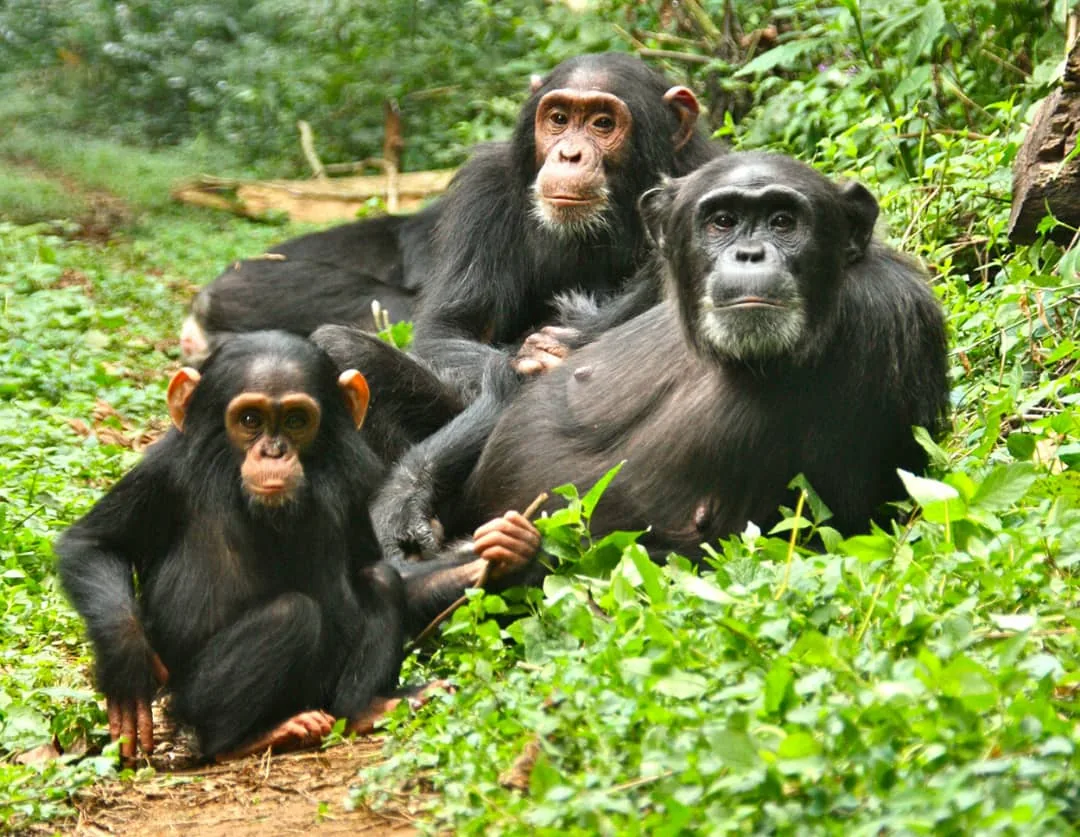
After the mountain, Kibale gives the itinerary a different kind of wilderness. Join the morning chimpanzee tracking briefing, enter the forest with ranger guides and listen for calls before spending time with a located chimpanzee community. Later, add Bigodi wetland or a community walk if energy allows.
Chimpanzee tracking permit included in quotation
Possible sightings of red-tailed, blue and colobus monkeys
Overnight: Kibale / Fort Portal lodge
Day 11
Crater Lake Morning and Return to Kampala or Entebbe
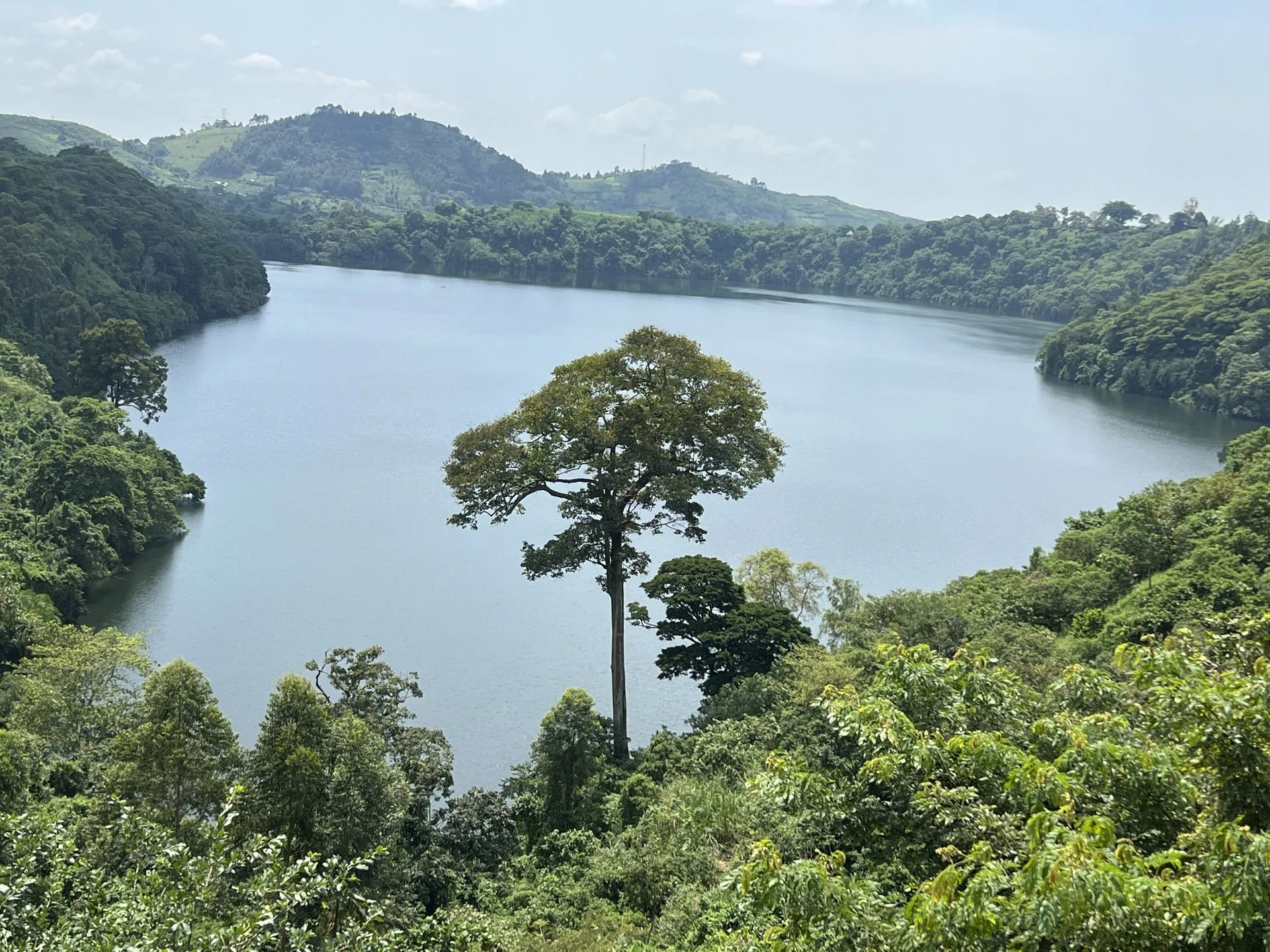
Begin gently with crater lake views, coffee-country scenery or a relaxed lodge breakfast. Then drive back to Kampala or Entebbe with planned comfort stops, arriving for a city hotel drop-off or an evening flight if timing allows.
Flexible final morning around Fort Portal / Kibale
Private transfer to Kampala or Entebbe
End of 11-day Rwenzori and primates safari
Included
Private road transfers in Uganda
Mountain guides, porter support, meals and mountain-hut accommodation on the eight-day trek
Group technical climbing kit: ropes, harnesses, carabiners and guide-managed rope / belay support for the summit section
Kibale chimpanzee tracking permit per person
Listed lodge nights before and after the trek, confirmed by accommodation choice and availability
Technical equipment: supplied vs personal
The mountain operator supplies the shared climbing system listed above. You must bring compatible waterproof trekking or mountaineering boots, waterproof layers, insulated clothing, gloves, a headlamp and a sleeping bag. Crampons and ice axes are not assumed included: availability, fit, rental terms and any additional charge are confirmed in your written plan before you book.
Exclusions and personal costs
International flights, visas, travel / medical insurance and evacuation or rescue cover
Personal technical and clothing kit, plus any pre-agreed rental items such as crampons or ice axe
Tips, drinks, laundry, personal purchases and services not expressly listed in the written quotation
Optional extensions, extra summit objectives, additional hotel nights and changes caused by personal preference
Mountain camp conditions
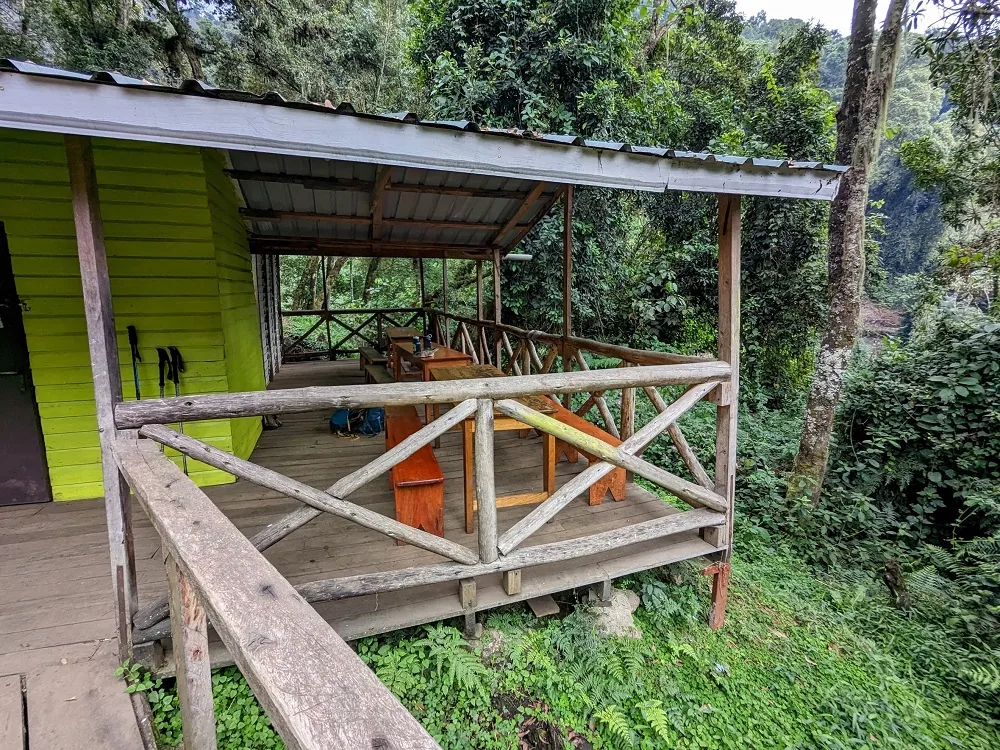
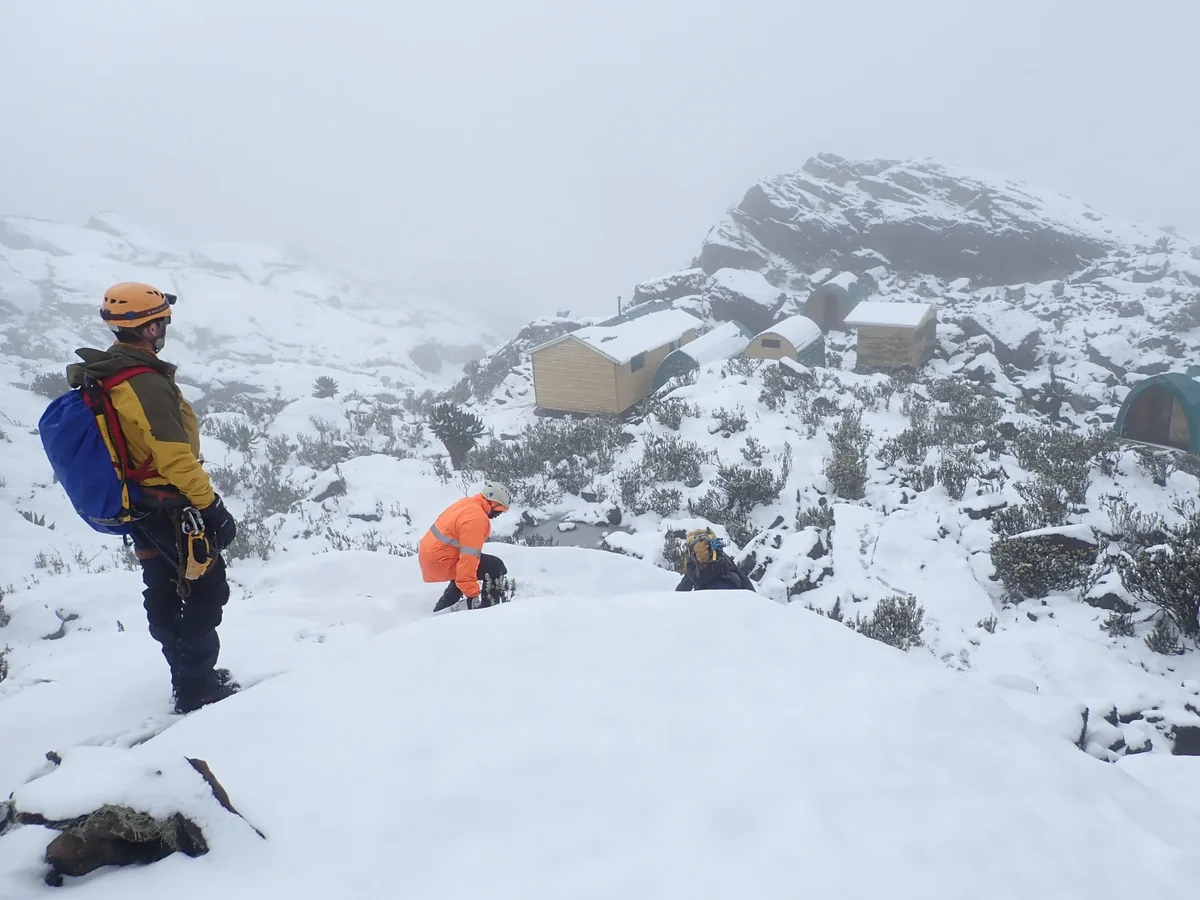
These are simple mountain huts, not lodges. Expect communal timber cabins or huts, shared outdoor washing facilities, basic lighting where available and very limited charging. Nights become colder and more exposed with altitude; Margherita Camp is a rocky, high camp around 4,485m. Bring dry layers, a warm sleeping bag and patience for weather-led adjustments.
Accommodation categories and examples
On the trek, overnights are fixed mountain camps: Sine, Mutinda, Bugata, Hunwick's, Margherita and Kiharo. Before the trek, we quote either a simple Kilembe trekker base (such as Rwenzori Trekkers Hostel) or a Kasese lodge / town-hotel category. After the trek, your Kibale or Fort Portal night is selected from the agreed accommodation category, subject to live availability. Your proposal names the actual properties before payment.
Important Mountain Note
Margherita Peak is now a technical climb. Guests should be ready to learn and follow rope, crampon, ascender, belay and ice-axe instructions. Weather, glacier conditions and guide judgment determine whether the summit attempt proceeds.
Bring
Good hiking boots, waterproof layers and warm summit clothing
Warm sleeping bag, gloves, headlamp and personal medication
Dry bags, trekking poles and a flexible adventure mindset
Plan with mountain readiness in mind
Technical trek, clear preparation
Before confirming this route, we review your mountain background, current fitness, summit ambition and any health or medication considerations relevant to high altitude. Your mountain operator confirms the current route, camp sequence, daily timing and technical equipment plan for your dates; the figures shown here are planning estimates, not a fixed schedule.
Arrange travel and medical insurance that explicitly covers technical mountain trekking and evacuation or rescue, and confirm the policy wording directly with your insurer. Weather, glacier conditions and guide judgment always come first. A summit attempt is never promised; when conditions are unsuitable, the team may adjust the plan or recommend a safer high-mountain viewpoint.
Trekking-specific planning support
Clear checks before you commit
Mountain-fit review: your trekking background, current conditioning, summit expectations and insurance are considered before the route is confirmed.
Written operational detail: your proposal identifies the lodge category, inclusions, exclusions, personal-kit responsibility and any agreed technical-item rental.
Guide-led safety decisions: the mountain team controls pacing, technical instruction and turnaround decisions; a summit is never sold as guaranteed.
Questions before you commit to the mountain
Is the Margherita Peak summit guaranteed?
No. The summit attempt depends on weather, glacier conditions, group readiness and the mountain guides' safety judgment.
How fit should I be for this Rwenzori itinerary?
This is a demanding high-altitude trek. Before confirmation, we discuss your mountain experience, current fitness and comfort with technical guidance.
What insurance is required?
Arrange travel and medical insurance that explicitly covers technical mountain trekking and evacuation or rescue and confirm the policy wording directly with your insurer.
What happens after the mountain trek?
The itinerary continues to Kibale for chimpanzee tracking and a gentler crater-lake finish before the private transfer back to Kampala or Entebbe.
What is included in the displayed starting price?
The starting rate is an indicative per-person price for two travelers sharing. Your written proposal confirms the selected accommodation, permits, technical support, dates, and every inclusion in the final trip total.
Are daily distances and times fixed?
No. Distances, walking times and elevations are planning estimates. The mountain operator and guides confirm the route and adjust the pace or camp plan for weather, trail conditions and the group's safety.
Private planning, in writing
Get your route, support plan and tailored price
Share your dates, group size and trekking background. We will check route conditions, mountain support, Kibale timing and lodge availability, then send the exact inclusions and price in writing.