
When the Forest Starts Speaking
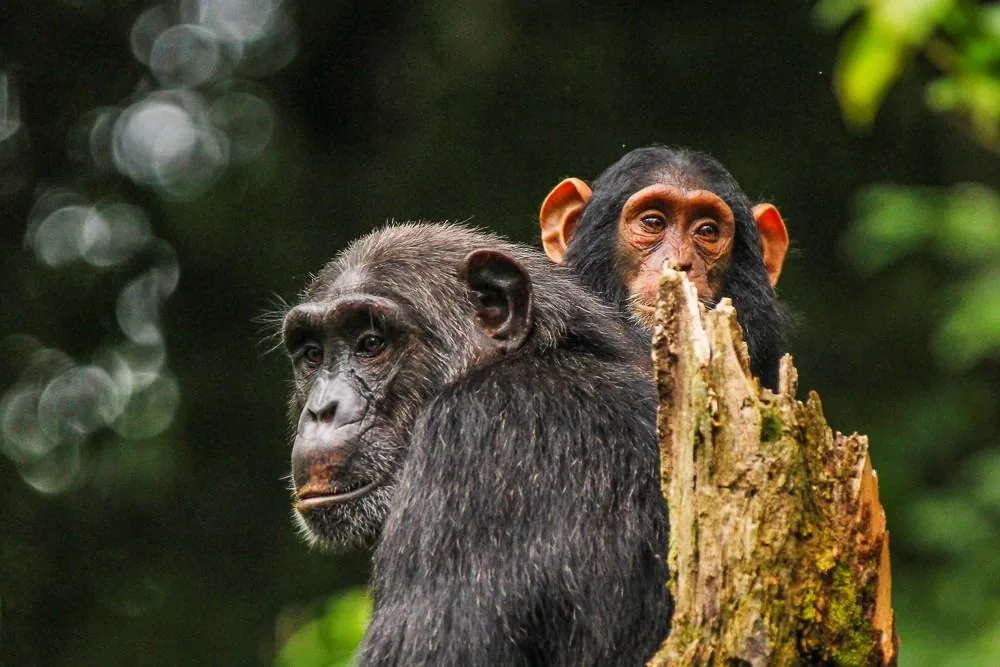
Chimpanzees are one of our closest living relatives, sharing about 98 percent of their genes with humans. In person, that closeness does not feel like a statistic. It feels like a hand gripping a branch with an opposable thumb, a face turning to read the room, a youngster testing its courage and a sudden pant-hoot rolling through the forest like news.
Uganda offers some of East Africa’s most reliable chimpanzee encounters, especially in Kibale Forest National Park, where the forest is dense, vocal and full of primate life. A trek here is more restless than gorilla trekking. Chimps move quickly, drum on buttress roots, scream, hoot, climb, vanish and reappear with a confidence that makes the whole forest feel socially alive.
Where Chimpanzee Tracking Fits Best
The right forest changes the feeling of the day. Some places are famous for reliability, others for atmosphere, solitude or the drama of the landscape. We usually build chimp tracking into a broader Uganda route rather than treating it as a quick stop.
- Kibale Forest National Park: Uganda’s classic chimpanzee tracking forest and a natural match for Bigodi Wetland, crater lakes and western Uganda lodge time.
- Budongo Forest near Murchison Falls: a quieter forest extension for travelers already heading north for the Nile, falls and savannah wildlife.
- Kyambura Gorge in Queen Elizabeth National Park: a steep, atmospheric canyon where the search itself is part of the story.
- Kalinzu Forest Reserve: a raw forest option near Queen Elizabeth, useful for travelers who want a less polished, more stripped-back primate morning.
How a Chimp Community Works
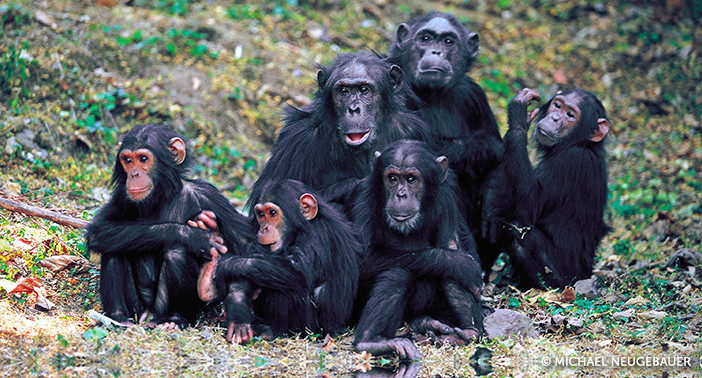
Chimpanzees live in large communities that may range from about 15 to 150 individuals, but they rarely move as one neat group. During the day, they split into smaller parties to feed, patrol, rest, groom, court, argue and listen for one another. This fission-fusion rhythm is why a trek can change quickly: one call from the canopy can pull attention across the forest.
Their society is often male-dominated, but power is not only about strength. Rank is built through confidence, memory, alliances, grooming partners, timing and knowing when to charge or when to step back. Disputes are often settled through display before real violence is needed. A branch dragged through leaves, a rush past another male or a thunderous pant-hoot can be a political message.
Noise, Intelligence and Tool Use
Chimpanzees are loud, social and emotionally legible. Pant-hoots, screams, grunts, gestures and facial expressions are not random chaos; they help the community stay connected in thick vegetation. When one chimp calls and another answers from far away, the forest suddenly has distance, direction and tension.
Their intelligence is practical. Chimpanzee populations have been recorded using and modifying sticks, stones, grass and leaves to gather termites, ants, honey, nuts and water. Younger chimps learn by watching older individuals, so the forest carries culture as well as instinct.
Chimpanzee Life Cycle: From Birth to Death
A chimpanzee’s life usually begins after about eight months of gestation, most often with a single infant. The newborn is small, almost helpless and immediately dependent on the mother’s body, warmth, milk and movement through the forest.
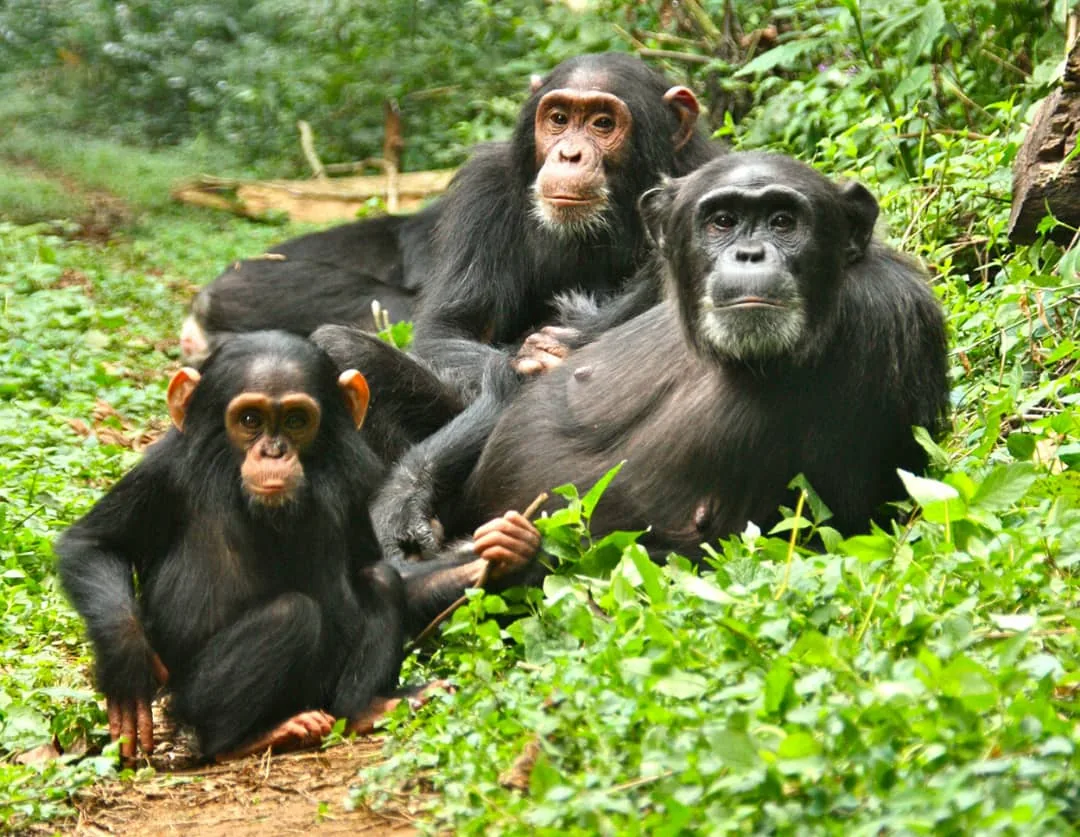
The first years are a slow education. A baby first clings beneath the mother, then rides on her back, watches what she eats, sleeps close to her, learns the shape of the forest and absorbs the rules of a community where every relationship matters. Weaning can take several years, but the mother-child bond often lasts long after milk is no longer needed.
Juveniles grow through play, imitation, climbing, wrestling, grooming and the first experiments with tools. Adolescence brings sharper social pressure. Young males usually remain in their birth community and begin testing rank through display, alliances and patience. Many females leave their birth group around maturity, joining another community where they must learn new relationships.
Adulthood is built around feeding knowledge, politics, mating, motherhood, patrols, grooming, food sharing, conflict and reconciliation. Females often raise only a few surviving young in a lifetime, which makes every infant important. Males may rise, fall and rise again through alliances, confidence and careful timing.
Old age changes the rhythm. Hair grays, strength fades, teeth wear, injuries matter more and former high rank may become memory rather than daily power. A chimpanzee may live for decades in the wild and death may come through age, illness, injury, predation, conflict or the pressures of habitat loss. The full life of a chimpanzee is not a simple timeline; it is a long social biography written by family, forest, memory and survival.
The Male Chimpanzee: Power With a Cost
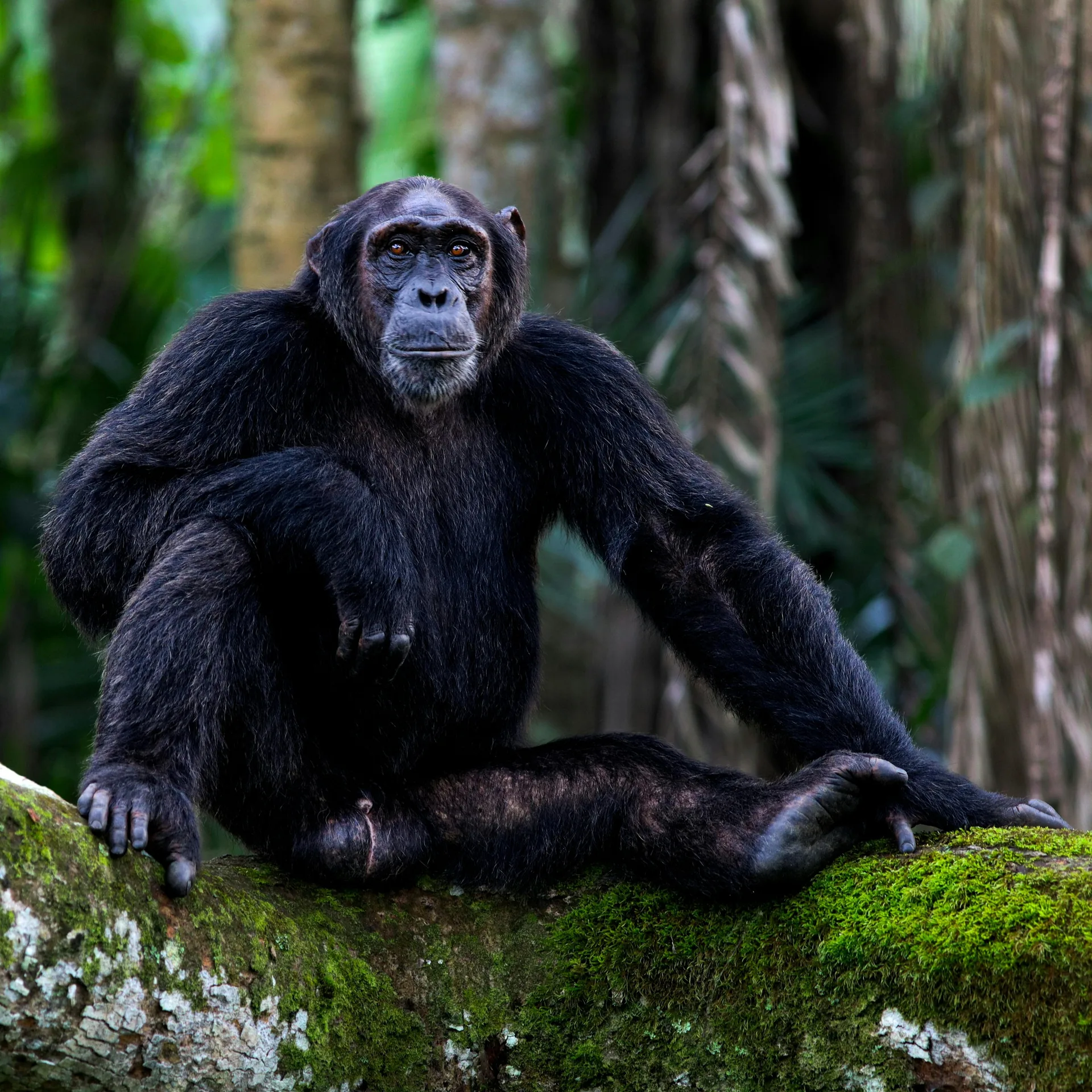
The life of a male chimpanzee is a long apprenticeship in reading the group. As a youngster, he stays close to his mother, learning what to eat, who to avoid, where to sleep and how adults behave when the mood changes. Play-fighting, chasing, climbing and noisy wrestling are not just games; they are preparation.
As he matures, the stakes rise. Young males test limits, form alliances, size up rivals and search for openings. A high-ranking male may gain better access to food and mating opportunities, but staying near the top is exhausting. One injury, one poor alliance or one badly timed challenge can change his life overnight. Even powerful males need grooming partners and political friendships. Lone confidence is rarely enough.
In old age, power softens. Some males drop in rank but keep a kind of remembered authority through experience and old alliances. Others become quieter, watching the drama they once shaped. It is a tough life, full of strategy, rivalry, survival and the need to belong.
Planning It Well
Chimpanzee tracking works beautifully with Kibale chimpanzee tracking, a gorilla route through Bwindi Impenetrable National Park or wildlife days in Queen Elizabeth National Park and Murchison Falls National Park. For ready-made route ideas, compare the 8 Days Gorilla and Wildlife Safari, the 14 Days Honeymooners Safari or the longer 11 Days Rwenzori Hiking and Primates Safari.
The practical rhythm matters: permits, forest entry time, lodge location, driving distance and how much energy you want around the trek. Some travelers want the most reliable chimp encounter possible. Others want a quieter forest and a slower morning. The best safari is the one paced honestly around you.