Lake Mburo National Park safari guide: walking, boat trips and wildlife.
Plan Lake Mburo around guided walks, game drives, a boat safari, zebra and impala viewing, the right entry gate and a well-paced route toward Bwindi or Queen Elizabeth National Park.
Lake Mburo earns its place by changing the tempo of the journey.
This is not the park you choose for huge distances or heavy predator drama. You choose it because the safari can come down to eye level: zebra grazing near the road, warthogs slipping through short grass, hippos breathing from the lake and a guide reading tracks while you are outside the vehicle.
In practice, we use Lake Mburo when a route needs relief. It can soften the first safari night, break the long road toward the southwest or give travelers one last wildlife evening before Kampala or Entebbe.
A compact park with several landscapes
Lake Mburo is more than a convenient stop beside the western road.
The 370-square-kilometre park holds open savannah, acacia woodland, rocky ridges, papyrus wetlands and five lakes. Wetland habitats cover about a fifth of the protected area, so the safari shifts quickly between grazing country, wooded tracks and water.
It is Uganda's smallest savannah national park, but compact does not mean empty. Shorter distances make it easier to combine a game drive with time on foot or on the lake without turning the day into a race.
Why the woodland feels different
The absence of elephants has allowed a denser acacia character to develop.
Lake Mburo does not carry the same open-plains scale as Murchison or Queen Elizabeth. Woodland, bush and rocky ground shape visibility, while zebra, impala, eland, buffalo and giraffe move through a more intimate landscape.
That difference is the point. Come for close-range habitat reading and varied ways to explore, not for a guaranteed predator checklist.
What makes it worth the route
The strongest Lake Mburo plans let the small moments do the work.
These are the pieces that make the park feel personal rather than just convenient.
Walking safari
Being on foot changes the scale of the safari: tracks, wind, dung, birds and distance suddenly matter.
Boat time on the lake
The lake slows the day down with hippos, birds, shoreline movement and a quieter kind of wildlife watching.
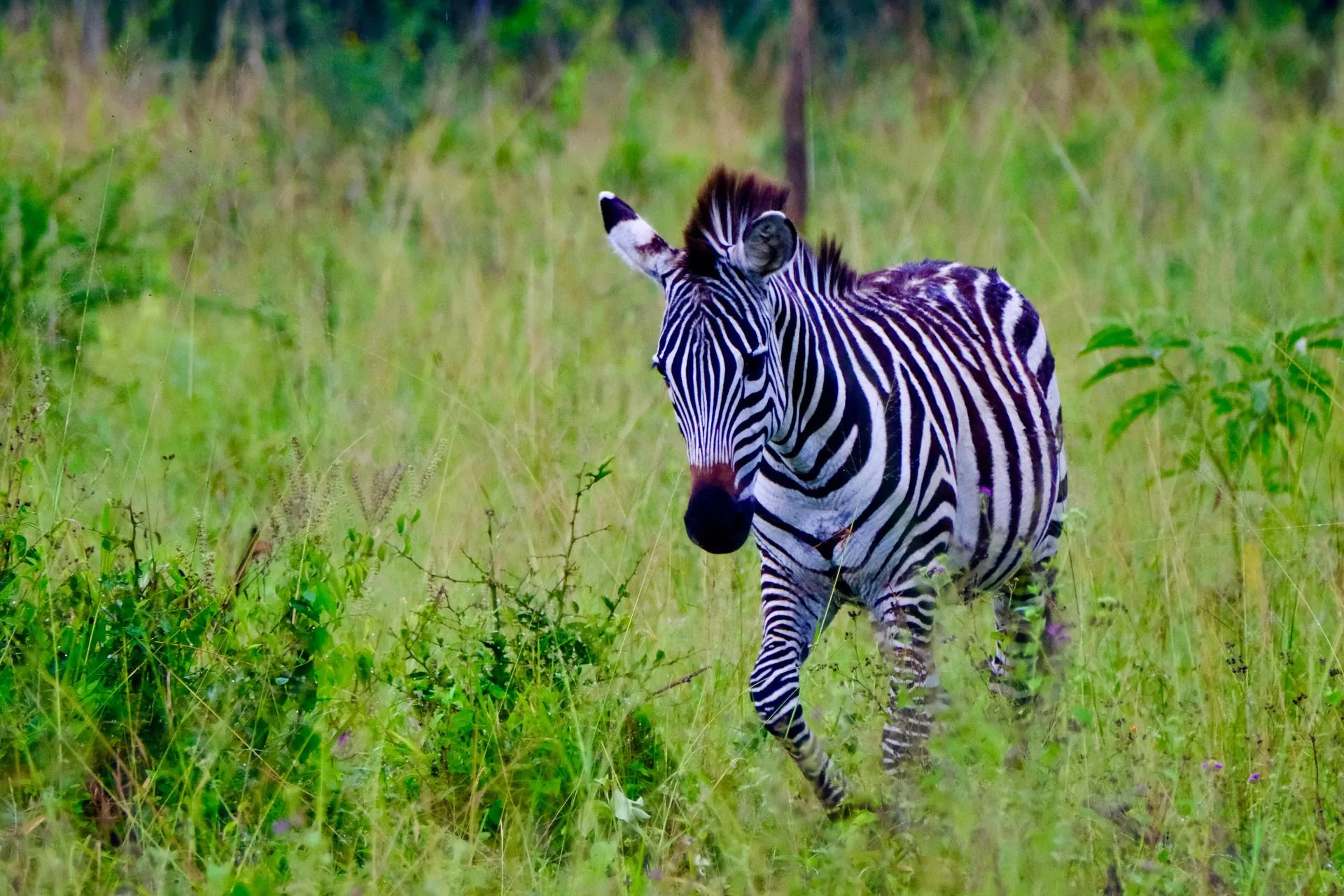
Zebra, impala and open grazing country
The open grazing country gives Mburo its signature look and an easy wildlife rhythm families often enjoy.
Excellent route stopover
Placed well, the park turns a long transfer into a real safari chapter instead of dead road time.
Wildlife without inflated promises
Lake Mburo is strongest for grazers, wetland life and patient woodland viewing.
Zebra and impala are the visual signatures, while eland, buffalo, giraffe, topi, waterbuck and warthog add variety. Hippos and crocodiles belong to the lake; leopard and hyena are possible but never scheduled.
Zebra and impala country
Lake Mburo is one of Uganda's easiest places to watch plains zebra and its only national park with impala.
Five-lake wetland system
Lake edges and papyrus habitats support hippos, crocodiles, waterbirds and a completely different rhythm from the game tracks.
Acacia and wetland birding
More than 315 bird species are recorded, with particularly useful birding around Rwonyo, woodland and wetland margins.
Predators remain wild possibilities
Leopard and hyena occur, but woodland, timing and luck decide sightings. The park should never be sold on a predator guarantee.
Suggested flow
Give Mburo a simple shape and it usually works beautifully.
Use its compact size well: Mburo rewards clean timing, short movements and guides who know when to stop for small details.
Add a walk or boat: Those lighter activities are what make the park feel different from vehicle-led safari stops.
Treat it as a recovery park: It often works best between longer drives, gorilla trekking days or a final return toward Entebbe.
Keep the plan uncluttered: One good activity, a good meal and a quiet evening can beat a packed checklist here.
Practical tips
Planning notes that actually matter.
Best stay: One night can work well, but two nights gives you a more relaxed feel if time allows.
Trip fit: It is especially good for travelers who want walking, lake time, zebra country and a softer safari mood.
Optional extras: Some lodges offer added activities like horseback or cycling, depending on the property.
Road logic: Lake Mburo often improves the route simply by breaking the drive at the right point.
Choose the activity before adding another night
The best Lake Mburo plans use the park's variety, not just its location.
Game drives, ranger-guided walks and boat safaris are the core choices. Horse riding and cycling may be arranged through particular properties or operators, subject to current access, ability and availability.
Game drives
Use early or late light for zebra, impala, giraffe, buffalo and woodland edges. Night drives require current park arrangements.
Guided walking safari
Walk only with an authorized guide. Tracks, wind, distance and animal behavior become more important outside the vehicle.
Boat safari
Confirm the current departure and timing in advance. The lake is best for hippos, crocodiles, waterbirds and a slower hour on the water.
Property-based activities
Horseback and cycling options are not generic inclusions. We confirm the provider, route, rider fit, timing and extra cost before quoting them.
Access through Nshara or Sanga
Gate choice should follow the lodge and the next road day.
Lake Mburo lies off the Kampala-Mbarara road. Nshara and Sanga are the principal approaches from that highway and both lead toward the Rwonyo headquarters area. Road works, rain and the exact lodge position can change the best choice.
Confirm the gate before departure rather than following a generic map pin. The right approach saves unnecessary backtracking and protects the first activity window.
Ankole cattle country
Community context is strongest when it is locally hosted and fairly arranged.
The wider landscape is closely associated with Banyankole farming and Bahima cattle-keeping traditions, including long-horned Ankole cattle. A good visit should create conversation and local value, not turn daily life into a roadside display.
Ask before photographing people or homesteads, agree what the visit includes and leave enough time for the host rather than squeezing culture into a transfer-day checklist.
Where the stay fits
How we choose stays around Lake Mburo.
The right stay depends on the gate, first activity, road direction and whether the lodge itself should carry part of the experience.
Practical
Simple camps and guest stays near the gates
These suit a focused overnight when location matters more than lodge facilities. We confirm current standards, meals and gate distance before recommending one.
Comfort
Rwakobo Rock and similar park-edge stays
A park-edge base can combine comfortable cottages, wildlife around the property and practical Nshara access without forcing a luxury spend.
Premium
Mihingo when the lodge is part of the story
Mihingo can fit guests who value privacy, views and property-run activities such as horse riding. Availability and activity suitability must be confirmed.
We select the lodge after confirming the gate, activity plan and next destination, because a pretty room in the wrong position can make a short Lake Mburo stay feel rushed.
Natural route pairings
Natural route pairings around Lake Mburo.
Lake Mburo is usually at its best as part of a smarter route rather than a destination trying to carry the whole safari alone.
Practical answers before you add the park to an itinerary.
Is Lake Mburo National Park worth visiting?
Yes, when you want walking, boat time, zebra and impala viewing or a useful wildlife stop on the western Uganda road. It is less suitable if your only priority is a long big-cat game drive.
How many nights should I spend at Lake Mburo?
One night can support a focused game drive, walk or boat safari. Two nights are better when you want more than one activity and time to enjoy the lodge without rushing the next transfer.
Can I combine Lake Mburo with gorilla trekking in Bwindi?
Yes. The 5-day gorilla and Lake Mburo safari shows the most direct pairing, while longer routes can continue through Queen Elizabeth or Kibale.
Which Lake Mburo activities need advance planning?
Ranger-guided walks, boat departures, night drives, horseback safaris and cycling should be checked before the itinerary is final. Access, times, providers and suitability can change.
Is Lake Mburo suitable for families and couples?
Often, yes. Its compact size and varied activities can suit families and couples, but age limits, walking ability, riding experience and lodge position should be confirmed for the exact group. Use our private safari planning form for a route matched to your travelers.
Tell us whether Lake Mburo should break the road, begin the safari gently or close the journey well.
We can keep it simple and strategic or give it more time for walking, lake activity and a slower final wildlife mood.